2025: Stability, and a Foundation for Growth

Our hopes for a more just, safe and peaceful world can only be achieved when there is universal respect for the inherent dignity and equal rights of all members of the human family.” Phumzile Mlambo-Ngcuka 

As we head into the new year, I want to celebrate our achievements in 2025 – none of which would have been possible with the many people who have supported us by donating, volunteering, referring others our way, etc.  

Here are a few highlights from 2025: 

We had a productive year, positively impacting myriad incarcerated people, their families and the broader justice community. We began 2025 by bringing on more consulting clinical staff, thus growing our fee-for-service revenue, and ended it with a strategic-planning retreat to help bring us to the next level for an even more productive 2026. Our strategic plan, now in development, will enable us to approach funders to demonstrate that we have a sound growth strategy to build the infrastructure needed for even greater impact. 

Throughout the year, we conducted training sessions for the Administrative Office of the U.S. Courts (AOUSC), defender organizations and even the U.S. Probation Office in the Eastern District of Pennsylvania. In addition to our basic BOP-related training for attorneys, we conducted two national training sessions for the AOUSC on transgender issues and a webinar for paralegals, investigators and other court support staff. 

In the spring of 2025, we were awarded a $50,000 state grant as a co-applicant for the preliminary planning of a day treatment center in Pennsylvania. (It is a long-term goal for PERA to pilot programs like this as a prison-diversion strategy or rehabilitation option for halfway house residents.) In the summer, we participated in a New Jersey district-wide training for federal judges. We also executed a retainer agreement for the Western District of North Carolina to support its clients with declarations and general BOP-related issues. 

In the fall, we engaged with various ACLU attorneys, both on a pro bono and fee-for-service basis, to support First Step Act (FSA) litigation as well as actions supporting individuals who had been given the death penalty before former President Biden commuted their sentences. These individuals were moved to USP Terre Haute, and now President Trump is pushing to send them to the ADMAX, the only facility where true solitary confinement is enforced 24/7. 

Throughout 2025, we maintained active correspondence via the BOP email program, helping hundreds of federal prisoners navigate the system within the BOP policy framework in a professional and non-adversarial manner. We regularly engaged with BOP support coordinators and higher-level bureau officials to significantly aid individuals and families. For instance, a retired BOP chaplain reached out to us who had been inappropriately terminated as a volunteer, and we intervened to help him be reinstated after we brought the case to the attention of central office management. We also were able to help a person who had been housed in the SHU for over 14 months, resulting in his transfer to another facility’s general population.

We are continuing to grow our network and reputation and have become a go-to organization for the media, law clinics, politicians, CJA panel attorneys and numerous defender organizations. We were even invited as a stakeholder to provide input to the DOJ regarding its Access to Justice Initiative and the Federal Prison Oversight Act. The GAO also solicited our feedback on tits ongoing review of First Step Act implementation. 

One priority currently under development is a post-conviction support initiative that I hope to formalize with a law clinic and possibly another organization. Most promising is our meeting with NYU’s Jailhouse Lawyer’s Initiative (JLI) to collaborate on a pilot to provide legal support and education. We have already been able to get a few attorneys assigned to individuals who reached out to us for assistance, including an FSA case that was recently argued in the Third Circuit. Our declarations have assisted in the release of individuals with compassionate release cases, and judges have often cited our declarations in their decision-making process.

We continue to attract technical experts who want to make an impact and we now have a retired BOP medical doctor, former BOP psychologist, and a recently retired USPO sentencing guidelines expert complementing our existing staff. We continue to be fortunate to have compassionate people involved with the organization, as volunteers or at discounted rates, allowing $100 of every billable hour to be allocated to extending our services to those who would not be able to pay. We started the year struggling to make payroll but ended the year with approximately $27,000 in the account (and several billings pending receipt).   

But what really demonstrates our impact more than any meetings or dollars are the words of those we have assisted:

We won that parole case. You are like my magic wand. I’m so grateful for your time, educating both me and that parole board member. He had never recommended anyone for parole before… but he recommended my client for parole, and Mr. _____ is coming home after 40 years.”

I know that PERA can develop into the primary federal prison stakeholder in the country and significantly impact the federal justice community. We have made steady progress, and the strategic plan and our relationship development with high-profile stakeholders will grow our organization and impact even more. The impact we could collectively have on a broader scale once we have the financial support for our business infrastructure is endless. Donate what you can now and share this email with others who care about the cause!

With gratitude!  

Jack T. Donson, Executive Director
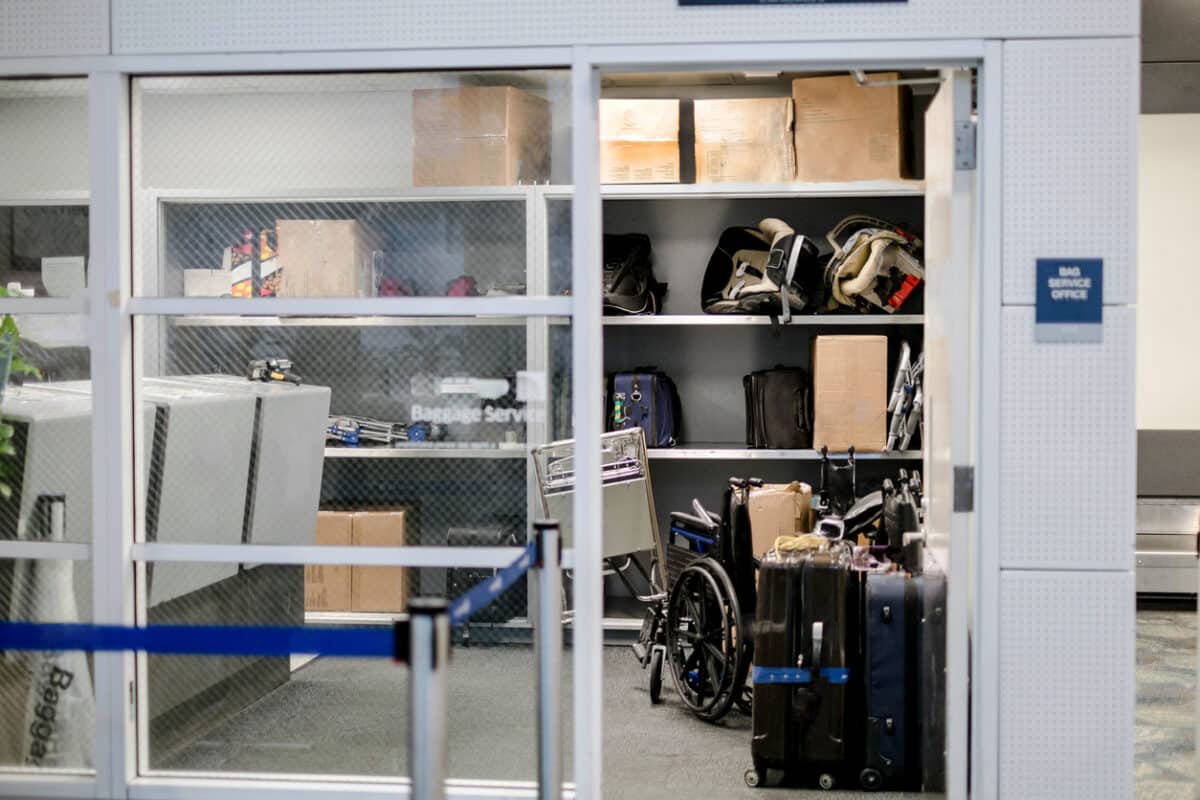
‘My Property is Missing!’: What to Do When Belongings Are Lost or Stolen

Two incidents were reported to us recently, illustrating how personal property can go “missing” when incarcerated individuals are sent to the SHU or transferred to another facility: 

WH: I was sent to the SHU for five days for what turned out to be a baseless investigation. While I was in the SHU, my entire locker was emptied. The inventory sheet was marked “locker found unsecure.” But I never left my locker unsecured. 

My locker caddy was folded up and thrown in the trash, and everything that had been inside was gone. I estimate the value to be just over $254 in personal property, plus eight books a friend sent me.  I’m talking hygiene products; writing materials; bags of coffee and unopened seasoning bottles; unopened shirts from the commissary that I was saving for when I leave prison; stamp books – I could go on.

—-

MB: One night, two lieutenants strip searched and shook me and my cellie down. Several days later, it happened again, with one lieutenant and three COs. It was so bad, they moved us to another cell in a different unit. 

Later in the month, there was a unit-wide cell search for five hours. It was the start of a unit lockdown for a month. We received no showers or anything. While we were still on lockdown, we were all moved to the gym for another mass shakedown, and they found a phone in my old cell. So, they sent me and my cellie to the SHU. Before we left, we packed all of our property in two commissary bags each and left them in the cell. A CO brought the bags upstairs to the cage that is supposed to be locked at all times. I asked six to seven staff to bring my property to my cell so it could be inventoried. But they just kept spinning me.

While I was in the SHU, men coming in told me that the cage had been left open, allowing inmates to steal all of my property. They told me, “Hey I just want to let you know that people are stealing all your stuff. Two guys are selling your wife’s pics as jack pics and some of your homeboys found your kids’ pictures in the trash.” Half of my photo albums are of family and friends who have passed away since I came to the feds in 2019. Also in my property were my wedding ring, court transcripts and eye contacts, without which I am legally blind. I was told it would take up to three months before I could be seen for a new prescription. 

I was in the SHU for four weeks. Staff never did anything, however. I even gave them the dates and times so they could check the surveillance cameras. 

Unfortunately, protection of personal property is difficult to proactively manage. These two case studies illustrate what can happen when staff don’t follow BOP policy and procedures. And when that occurs, there is not much that can be done. In WH’s case, it is difficult to prove that the individual’s locker was indeed locked (thus protecting his property from other inmates until an officer inventoried and stored his belongings). 

As for MB’s case, there isn’t a dedicated camera for the property room. Although a camera in the area might have picked up what transpired, video is generally not kept for more than three weeks. (And short of a court order, it is difficult to obtain; no one wants to release evidence of staff malfeasance.) LIkewise, filing grievances often merely causes hostility – as MB later discovered. 

The only recourse these two individuals have is to file a tort claim for the missing items. That is why it is so important for inmates to save their commissary receipts. If they can’t prove the value of their possessions, they can’t file a tort claim. (Past receipts are available from the commissary only for the current fiscal year.) And yes, that means there is no compensation possible for sentimental items like MB’s wedding ring. Note:

  • Tort claims must be filed within a year of the incident.
  • No more than $1,000 can be sought. 

What prisoners can do to protect themselves

There’s not much that could be done in advance by MB and WH to prevent what happened. But that’s not true for everyone. Here are some tips:

  • Fundamental to property protection is to never leave a locker unsecure. Too often, prisoners leave their lockers unlocked, which can lead to property theft as well as the planting of contraband by a staff member or another inmate. 
  • It’s also advisable for prisoners to have an understanding with their cell mate about what to do if they unexpectedly go to the SHU or are shipped out. For instance, if an inmate doesn’t return to their cell for a count, their cellmate should secure their locker immediately as a protection against theft.  
  • Always retain commissary receipts, especially for more expensive items. 

What BOP policy says

While BOP policy calls for officers conducting a shakedown to leave cells like they found them, that does not always happen. And when inmates are sent to the SHU, officers are supposed to secure their lockers and/or cell doors as soon as they are notified of the move. The shift officer is required to conduct an inventory. Then, the compound officer takes it to the property room in the SHU. Again, that doesn’t always happen. Property rooms are equipped with lockers that should be secured, and BOP policy states that staff “shall” provide inmates with a copy of the inventory form “as soon as practicable.” The inmates should then sign the form, signifying receipt of the inventory and its accuracy. A copy of the inventory must also be placed in the inmates’ central file.

Note that opened, perishable items are typically not packed up. The same goes for any items that exceed the allowable number. For example, prisoners are only allowed to have up to five books in their cells at any one time. (There is also a limit on what a person can have in the SHU, depending on whether a person is there for administrative detention [investigation, personal protection, etc.] or if they are in disciplinary segregation as a sanction.) 

A few related suggestions for handling problems:

  • The BOP’s special housing unit policy restricts what personal property can be brought into the SHU. 
  • All property-related concerns should be addressed to the SHU property officer. If that individual is not helpful, go to (in this order) the segregation review official (SRO, which is usually the SHU lieutenant), the SHU captain, the assistant warden for programs and the warden. Executive staff members are required to make SHU rounds weekly. If possible, property issues should be brought to the attention of the captain in front of the assistant warden for programs and/or warden during these rounds.
  • However, avoid being adversarial with SHU officers, or they may leave your property unsecured and thus vulnerable to theft by the SHU orderlies (as happened to MB).
  • File a grievance/administrative remedy only as a last resort, since this further creates hostility.

Treatment of property during transfers

The other time personal property often becomes an issue is when prisoners are transferred from once facility to another. BOP policy states:

“Personal property shall be shipped by staff to the receiving institution, with the exception of legal materials for active court cases and some other items deemed “necessary or appropriate” by by staff. These may be transported with the prisoners. 

Staff of the sending institution ship authorized personal property via bus, van or airlift directly to the receiving prison. Ordinarily, no more than two boxes of property (with the exception of legal materials) will be shipped at government expense for each inmate. However, prisoners may elect to pay for the shipment of additional boxes. 

R&D staff at the sending prison are responsible for recording all personal property that will be shipped to the receiving institution on an inventory form. The inmates should certify that the form is accurate and be given a copy to take with them. Without that form, it is difficult to prove that property was shipped if it later goes missing, or to file a tort claim.

Generally speaking, it should take no longer than a week or two for prisoners’ personal property to reach the final destination. If a month has elapsed and it has not been delivered, the inmate should approach a correctional systems staff member and ask that its status be investigated. Is it in the property room at the new prison, and just has not been given to the inmate? If not, the inmate should ask that the staff member call the transferring prison to inquire about the property’s status, and track it if necessary. If the correctional systems staff is unwilling to assist, a family member may contact a BOP regional support coordinator and ask for assistance. 

Remember:  Creating conflict with the correctional systems staff sometimes results in property being sent to the wrong institution, disappearing altogether or being “lost” in the sending facility’s property room.  If inmates are adversarial with staff, there is nothing but downsides! Inmates should try to maintain their composure no matter how far staff deviate from the policy and process. Never stoop to the level of staff. 

Prison Unions: a ‘Two-Edged Shank’

The dramatic move to terminate the master union agreement by the new bureau administration caused quite a stir in BOP land this week. I am an AFGE-CPL Local 33 member and have paid yearly dues since retirement. I’ve both negotiated one of the master agreements on the union side of the table and occupied management positions, so I can speak to lived experience on both fronts.

I want to say at the outset that I’m strongly in support of employee rights — including a BOP union and a master agreement that encompasses all the locals. The focus of PERA is primarily the need for reform of the bureau and the slow and painful evolution of BOP management. However, the union has often acted as an impediment to reform. And that’s partly why the new BOP management terminated the union contract. (President Trump paved the way, however, when he issued an executive order in March, citing a provision of the 1978 Civil Service Reform Act to ban unionization at most federal agencies under the auspices of national security. Intense litigation has ensued, but federal appellate courts have—with one exception—allowed the administration to proceed with implementation while those lawsuits work their way through the courts.) In a blog post on the BOP’s website, Bureau Director William Marshall said he “comes from a pro-union family,” but “when a union becomes an obstacle to progress instead of a partner in it, it’s time for change.” 

He is right that some union officials are their worst enemies and often act as obstacles to needed change. It was widely reported that resistance from the union, and her fear of it, was a major roadblock for former BOP Director Collette Peters.  And I certainly witnessed poor judgement when I worked inside: For example, union officials  would often leave their posts, allegedly for official union business, but mostly hung out in the office, etc. Meanwhile, other workers had to cover their posts  a real problem when there is a severe staffing crisis. Another concern I often hear about is the yearly trips to conferences by local union officials on the members’ dime, which appeared to involve more partying than meaningful business.

Unions also have a track record of overly protecting rogue staff and deliberately slow-walking approval of new policies. (Union officials are part of the review process when policies are updated and can invoke the right to negotiate if they believe the policy update will affect its members – which many  will, since they staff the prisons.) This has historically caused significant delays in policy implementation but also gave dysfunctional BOP management a reason to maintain the status quo and blame the union for the inertia. This lack of progress on policy revisions has increased the BOP practice of managing by internal memoranda, which are frequently not publicly available (in contrast to official policies). A stark example of this is the policy governing placement in halfway houses (residential reentry centers, or RRCs), which has not been updated for nearly 30 years despite significant changes in the law (the Second Chance Act of 2007 and most recently the First Step Act of 2018).

However, dysfunction in the union/management relationship also occurs on the management side. Consider the process through which negotiations and other communications occur between local bargaining unit officials and management. When I was involved in negotiating the master agreement, workers were represented predominately by correctional officers and a few other line staff members, who sat across from a warden, associate warden and several department heads. That puts GS-8 correctional officers in a precarious position, since they must deal with people several levels above their boss. Political suicide often occurs, and management intimidation can impact negotiations, with one misstep wrecking a person’s career in the BOP “good ol’ boy” network (where promotion is not based on merit but the ability to be a good follower and boot lick).

Unfortunately, union officials predominately reflect the typical law-enforcement mentality of correctional officers, in which incapacitation trumps treatment. I could write a blog post just on this philosophical concept, but it can be summarized as “us vs. them.” In other words, the inmates are the enemy. This dichotomy is unnecessary and makes prisons more dangerous for both staff and the incarcerated. When the agency had stronger leadership in the 1980s and early ‘90s, the mantra was “firm but fair.” But that no longer seems to be the dominant practice, and PERA advocates for changing this mindset from the very beginning, when new hires are oriented at the Federal Law Enforcement Training Academy. Creating positive custodial and treatment relationships foster safe environments for everyone and reduces recidivism.   

Such a behavioral shift requires culture change, as well as real accountability. And the latter won’t be possible unless there is a truly independent ombudsman’s office. Creation of an ombudsman function was included in the recently enacted Federal Prison Oversight Act. However, it has not yet been funded. What a lost opportunity!

Here is a radical idea: Maybe the union rank and file should align with the incarcerated population. Despite the current divide, they share something critical: They are the ones living and working at ground zero of our prisons, and thus bearing the brunt of the risks (think high suicide rates and stress-related medical conditions) while management makes questionable decisions in their central and regional office crystal palaces. 

Death by a Thousand Cuts

“Death by a thousand cuts” seems to be the federal Bureau of Prisons’ SOP these days. From the creeping frequency of “modified” (partial) lockdowns, to ineffective policy implementation that is causing many prisoners to pay for phone calls that should be free, to reduced visiting hours, the BOP seems intent on fraying already fragile family bonds. 

Here’s a snapshot of how this behavior is manifesting itself across the network of 122 federal prisons. (To explore what other issues are being reported at the various prisons, visit the Prison Pulse Report.)

Phone calls to family

The BOP announced last fall that beginning this year, its incarcerated residents would no longer be able to make 510 minutes of free phone calls each month. Instead, only individuals who have an identified programming need and are at least on a waiting list for a matching program can make calls for free – and only up to 300 minutes per month. At least, that’s what the policy says. Five months after the change, we are still hearing that many eligible people are having to pay for their minutes—a charge many cannot afford. Combined, the reduced minutes and the cost are making it difficult for many incarcerated individuals to maintain consistent family ties. 

PERA partnered with More Than Our Crimes to provide a list of individuals and who were being forced to pay for minutes that should be free to the BOP’s regional “family support coordinators.” The response we received suggested, in part, that the individuals contact the executive assistants for the facilities involved, as well as file administrative remedies. “The Administrative Remedy Program provides an inmate with a detailed response in writing after review is completed, along with any further documentation for their inquiries.” What that response doesn’t say is that relief is rarely granted via the remedy process, and retaliation for filing them is common. What is also not acknowledged in the response is our report that every channel possible had already been tried by the individuals we cited. Said one person at FCI Sheridan in Oregon:

“Five people had the free phone time taken from them. Then we finally got it, but we’re not sure how. We talked to everyone up the ladder: the Unit Manager, Case Manager, Counselor, Psychology Staff and the CMC. But now what’s happening is that if you complete all of your FSA programming needs then your phone time is taken from you.”

Another individual at Forrest City Low in Arkansas wrote, 

I should get them [the free minutes] and do not. My case manager said it’s the trust fund, the trust fund said it’s the region and it goes on without an answer.”

Perhaps this is why some people call the BOP “Backwards on Purpose.”

Lockdowns

If you’re locked down while incarcerated, that means you’re confined to your cell. It can last for a couple of hours, several days or even weeks. In the latter case, you’re only allowed out for a shower a couple of times a week. That means no phone calls, no visits. Reports received recently from members of the More Than Our Crimes network indicate that lockdowns of all forms are increasing, and increasingly rather kneejerk. Consider these examples:

We just came off a two-week lockdown, supposedly to save on overtime costs. Now we are being told we will be locked down one week each month (FCI Waseca, Minnesota)

They are locking us in every Tuesdays, Wednesdays and Thursday at 6 p.m. for the rest of the evening, supposedly because they are short of staff. (FCI Thomson, Illinois)

We are just now coming out this week after a month behind the door. Some guy checked in and told the captain that a weapon was in one of the units. So, they tore the whole compound up, with no success. They didn’t find anything. (FCI McDowell, West Virginia)

The prison has been on lockdown since February 19 [written March 31]. Every time I call the facility, there is no answer at all, or when I make a selection from the automated menu, there is a silent pause and then it hangs up. All visitation has been cancelled, and we have no contact with our loved one! (FCI Allenwood, Pennsylvania)

William Marshall, the new BOP director, said on Fox News that he wants to add programming to the tablets incarcerated people can buy, so that education won’t be interrupted during lockdowns. While that is a great idea, we also want to see lockdowns become rare, not routine like they are now.

Visits

At the same time that calls are more expensive and people are locked in more, we are hearing stories about greater barriers to in-person visits. Consider:

  • At both USP Coleman 1 in Florida and FCI Sheridan in Oregon, visitors have recently been turned away after traveling long distances when an ion scanner erroneously detected the presence of heroin. Ion scanners are so sensitive they can detect minuscule amounts of substances – which can be good but also leads to false positives. In addition, even accidental or incidental contact with drugs (such as touching currency containing trace drug residue) can trigger a false positive. 
  • FCI Sheridan has further discouraged visits by allowing them on only one weekend a month, and never on holidays.
  • At FCI Allenwood in Pennsylvania, families recently reported that physical contact is no longer allowed during visits. Family members are separated from loved ones by a plastic barrier. They must talk through holes drilled in the plastic! Supposedly this COVID-like practice is due to short staffing and it will stay in place until at least November.
  • At the Hazelton complex in West Virginia, the visiting area contains no vending machines – making it very difficult for young children to stay for more than a couple of hours. And at USP Lee in Virginia, if the incarcerated person must use the toilet, the visit is terminated.

Mail

We receive many reports of letters not received at all, or that arrive weeks after they were sent. Family members tell us they have resorted to numbering their letters so that they have some way to tell what has gone missing. Mail tampering is illegal, but is very hard to prove.

Connections to the outside world, especially with family members, is extremely important to prisoners’ mental health and social skills. They should be prioritized and protected, not sacrificed due to inconvenience or the little extra work they require to maintain.  

The ‘Trump Effect’ begins to emerge

The ‘Trump Effect’ begins to emerge

Before word spread of BOP Director Colette Peters’ resignation, the various Facebook groups for agency employees were abuzz with comments welcoming her departure.  In combination with some of President Trump’s first executive orders, her resignation may be telling about the direction of prison reform under the new administration.

First, consider that the acting director named to step into Peters’ shoes until a permanent replacement is chosen has a correctional services (“custody”) background, similar to former Director Michael Carvajal, who was forced out in 2022 due to rampant corruption and abuse. Interim Director William Lothrop began his BOP career in various non-professional, corrections officer positions, which are more focused on the incapacitation of incarcerated individuals at the expense of rehabilitation. And he worked his way up from those ranks as a lieutenant, captain, etc.

This choice for interim director is somewhat concerning, given the steady stream of recent disclosures of troubling behavior in the federal prison system, including rapes at FCI Dublin and physical abuse at USP Lee. An interesting subliminal message is found in Lothrop’s introductory statement on the BOP website, which returns to  the term “inmates.” Director Peters had replaced it with the term “adults in custody” (AICs). Semantics, however – while important – should take a back seat to the myriad needed reforms.

Peters’ legacy

It’s unfortunate that during her tenure, Director Peters focused more on public appearances and the image of reform than on attainable and relatively easy improvements that would have given her credibility with advocates for change, the federal justice community, and the rank and file. It’s not rocket science to operate a functioning appointment-and-telephone system for legal calls, a notification system to protect family visits from the frequent last-minute and/or lengthy visiting closures,  and stop wardens from operating carte blanche outside the scope and intent of policy, with little accountability and transparency.

Likewise, how hard is it to keep policy directives current and post updated and accurate information on facility websites? Why must AICs still complete archaic, carbon copy forms to file a complaint (which often must be submitted by hand to the very people who are the subject of the grievance), when they could be initiated electronically? These types of “low-hanging fruit” of easily correctable issues would have given her some serious street credibility. Instead, she was surrounded with an entrenched clique from yesteryears who ran the agency into the dirt.

If President Trump and his Attorney General-in-waiting Pamela Bondi want to leave a different legacy and appoint a BOP outsider (albeit someone with serious technical experience in carceral systems), they must avoid the mistakes that crippled both Director Peters and Mark Inch, the only other previous director who came from outside the agency. Directors who are not BOP insiders must be allowed to bring their top deputies with them, rather than be limited to the entrenched biases of the “old guard.”

President Trump wastes no time

As Director Peters left, Trump also announced a 90-day hiring freeze, ordering the directors of the Office of Personnel Management (OPM) and DOGE (Department of Government Efficiency) to develop a plan to reduce the size of the federal workforce. The only exempted positions are military personnel, and employees focused on immigration enforcement, national security or public safety. The BOP is not included in those exemptions, and the Office of Personnel Management has already instructed its management to identify employees currently on probationary status or administrative leave. Probationary employees are typically new hires brought on after extensive recruitment efforts. In addition, Lothrop has issued a memorandum prohibiting the filling of vacant positions and revoking all current offers.

This will be disastrous for the BOP. There is without a doubt many cuts that could be made within the BOP. For example, the six regional offices (each with 100 or more employees) are wasteful, as is the ill-deserved executive bonuses. And that new prison in Letcher County, Kentucky? Not needed. But what is needed in federal prisons are more correctional officers and medical/mental health treatment professionals. Shortages in those positions are causing lengthy lockdowns that prevent rehabilitative programming and unnecessary, harmful delays in medical testing and treatment.

Meanwhile, several other executive orders signed by President Trump on the first day of his second term promise to make the needed culture change within the BOP much more difficult. Several of the orders signal a return to a harsh regime that will both feed mass incarceration and condone mistreatment behind the walls and fences:

Death penalty reinstated

Trump ordered the attorney general to pursue the death penalty for “all crimes of a severity demanding its use” – specifically calling out crimes involving the murder of a law-enforcement officer and any capital crime committed by individuals who did not legally enter America. (Keep in mind that besides murder, capital crimes also include robbery and burglary!)

Reinforcing this call for the harshest of sentences is a new charging and sentencing policy issued this week by the interim attorney general. The memo effectively reverses the policy set under President Obama, which for the first time encouraged federal prosecutors to use their discretion to seek what seems proportionate and just, rather than push for the highest charges and longest sentences.

Draconian treatment condoned

One of Trump’s executive orders that didn’t get much public attention calls for the individuals whose death sentences were commuted to life without parole by President Biden to be imprisoned in “conditions consistent with the monstrosity of their crimes.” Specifically, he instructed the attorney general to “evaluate the places of imprisonment and conditions of confinement” for each of these 37 people, with the intent of assuring that they are sufficiently horrible. Sure, the order also carefully states that the actions taken should be “lawful and appropriate,” but the BOP is often given wide leeway in court. Plus, the abuses at Dublin and Lee illustrate that there are corrupt staff members who could see that order as tacit permission for abuse.  

Welcome back, profit motive

Trump rescinded Biden’s order that barred contracts between the Department of Justice and private detention centers. That should be regarded with caution, since the opportunity for corruption is rife with privately run detention centers. Consider the case in 2018, when the bureau’s assistant director for correctional programs sent a memorandum tasking prison leaders with identifying  people who could be transferred to private facilities. A few months later, he announced his retirement and began working at the GEO Group as its director of operations. The company is one of the largest contractors for privately operated prisons. And a 2015 analysis of private prison contracts found that two-thirds included requirements that governments keep the facilities filled or pay for unused, empty beds.

Withdrawal of consideration for transgender people

Trump’s executive order states that “sex” refers to an “individual’s immutable biological classification as either male or female.” The order goes on to bar the federal government from funding gender-affirming care, mandate that trans women be housed in men’s prisons, and remove protections for transgender people from the Prison Rape Elimination Act (PREA). Current BOP policy (in place since 2016) allows individuals who identify as the opposite sex to not only receive gender-change treatment, but also be housed in a prison that matches their chosen gender. (Despite this policy, the agency already had started to back off on the directive. Criticism had been harsh from some members of Congress, and the policy was targeted in some Trump campaign ads. Likewise, some female prisoners have charged that they were being sexually harassed by transgender individuals who had not yet completed the sex-change process.)

According to the BOP website, there are currently 1,538 transgender females in its custody and 750 transgender males. If Trump’s executive order prevails, what will happen to these individuals? A February report from the Vera Institute of Justice and Black and Pink National reported that out of nearly 300 incarcerated trans people surveyed, 31% said violence from fellow prisoners is the principal reason they feel unsafe. Likewise, more than half have reported being sexually assaulted during their current prison sentences.

This is a battle that will be fought in the courts.

Many of Trump’s executive orders are a boon for lawyers and will require all hands on deck across the BOP (and among stakeholders such as PERA) due to the potential for abuse. Stay tuned.

.

Collective Punishment on Steroids

Recently, it has become clear that sanctions normally designed to penalize the negative behavior of an individual are being imposed on an entire unit, or even facility. For example, an individual assaults an officer, or a fight breaks out between a couple of AICs, and the entire unit of 120 men is locked down for weeks. Or contraband comes in through the mail and the entire prison is shut down. A few cases in point:

  • On Aug. 9, the mailroom supervisor at USP Atwater (CA), died after opening a letter containing pages that appeared to be “soaked” with a substance. Although one individual inside and two in the community were pretty quickly indicted in connection with the alleged drug smuggling, the entire prison of 1,078 men were immediately locked down 24/7 until they began being gradually let out on Sept. 30. 
  • On Aug. 14, FCI McKean (PA) reported contraband coming in through the mail and locked down all 930 AICs. Around Aug. 20, an AIC-on-staff assault occurred, and the lockdown was extended. In a memo sent outside by an AIC on Sept. 19, the warden said, “…the timeline for transition back to normal operations will be dictated by inmate behavior.” It was not until Oct. 7 that the lockdown was gradually lifted.
  • Since Atwater, concerns about drugs coming in via AIC smuggling have spiked, along with seemingly kneejerk reactions. At FCI Thomson (a low-security institution!), a memo was issued saying, “…possession and/or distribution of hard contraband will not be tolerated and (AICs) will be held responsible. Due to recent events, the following restrictions will be in place effective Tuesday September 17, until further notice: 
    • Monthly commissary spending limits reduced to $50 (from $350).
    • Inmate telephone privileges reduced to two 5-minute calls per day (from 15 minutes, unlimited).
    • Inmate emails reduced to five per day.
    • Outside recreation yard is closed.
  • And then this week, we received this report from FCI Sheridan (OR): “Everyone in our unit lost our commissary privileges because we didn’t score high enough in the sanitation inspection. No, it was not because our unit was dirty. They scored us low because some people had gotten a second mattress somehow to make their beds more comfortable. Why penalize us all? And why this way? This is the only place I have been in where they do not want us to spend money in the commissary.”

The BOP has always used collective punishment as a tool, albeit on a limited, tempered scale. For instance, a messy TV room in a particular unit might be closed for a few days to send a message that good sanitation is important. The belief is that peer pressure just might solve the problem. And when a larger-scale fight or other disturbance occurs, it is often practical to lock down the facility for mass interviews and cell checks for weapons. But that process typically only requires a few days (although there are rare exceptions, like when one gang targets another, even causing threats at other facilities). And in the case of the death at Atwater, closing down the prison for maybe a week or two allowed the staff to work through their grief and anger without allowing an opportunity for those emotions to spill over into altercations with AICs. 

However, mass lockdowns should be used sparingly and lifted as soon as possible – with special attention paid to impact on family visits. The negative impact of lockdowns should be considered along with any immediate benefit. These adverse ripple effects were documented in this analysis of a suicide that occurred this summer at USP Victorville (CA). 

And some of these actions, such as revocation of commissary privileges, are supposed to be sanctions imposed on individuals by a disciplinary hearing officer (DHO) – not as a generic action imposed on a collective basis. 

And when it comes to contraband, it also seems that the fact that contraband is also introduced into a facility by staff members who repeatedly circumvent the metal detectors. Yet no actions appear to have been taken to control this elephant in the room.

These are dangerous management practices that can themselves trigger assaults, which jeopardize the safety of both staff members and AICs – especially in higher-security facilities. Regional directors seem to have little accountability for their wardens’ decisions, and it does not appear that the central office is providing the necessary guidance for fairness and consistency. A centralized policy governing what types of collective punishment is acceptable and when, with a specific focus on lockdowns, is needed. Some facilities appear to be trying to avoid acknowledging their increased use of lockdowns by resorting to “modified” schedules, in which AICs are let out for small portions of the day, then sent back into their cells. This used to be a way to ease off of lockdowns and transition back to normal practice. But now such lockdowns have become an independent practice of their own. What is lacking is specific, nationwide standard procedures, and data that allows transparency and accountability. While there are individual, institutional contingency plans that include lockdowns for emergencies, they are not policy documents in the public domain. 

When drafting the necessary policies, the BOP would benefit from following the example of the Environmental Protection Agency, conducting an impact assessments that look at both benefits and risks of its proposed actions.

Lockdowns, cancellation of visiting, limiting contact with loved ones through phone and email, and mass commissary restrictions are not reform-minded practices with rehabilitation as a mission equal to security. 

BOP FSA Missteps Continue

In early September, the BOP’s FSA time-credit assessment tool was updated to incorporate future pre-release credits. However, a few days later, BOP case managers were told by the central office to stop sharing the assessments, amid rumors of a “glitch.” I did some calculations using a couple of the new assessments and they were all off substantially. One assessment produced an “FSA conditional placement date” that was two years earlier than the person’s actual eligibility. It’s disturbing that the FSA was passed in 2018, the time-credit application went live in 2022, and yet the government still can’t get it right. Earlier this month, the application was reportedly corrected once again but we are getting reports of case managers refusing to provide copies.  

A few things to keep in mind regarding the BOP’s calculation of FSA time credits: An average of 27 months is required for AICs to earn the maximum 365 days of time credits. This advances the projected release date from GCT REL (good conduct time, or 15%) to FSA REL. Be aware that a person’s release date on the BOP website updates monthly but stops when the maximum 365 days of credits are earned.  At that point, pre-release credits can be calculated by adding the monthly awards going forward while subtracting the same amount of days from the FSA release date at the back end. The point at which they meet is the FSA conditional placement date (CPD). The CPD is the date when a person can be transferred to an RRC (halfway house) or home detention. 

It is very important that pre-release credits are calculated and applied! PERA is supporting the New York ACLU, which is collecting information on cases in which AICs are past their CPD but remain in prison. This issue is not going away. 

Meanwhile, on Oct. 4, the BOP published this statement:

The BOP is updating its FSA time credit system to better support AICs as they engage in pre-release planning. Under the FSA, AICs earn time credits for completing approved programs while in custody, which can reduce the time before they are placed in community settings such as Residential Reentry Centers (RRCs) or home confinement.

AICs will now see three key dates in their records to help them plan their release:

  • FTC conditional placement date: The date when an AIC may be eligible for pre-release placement based on earned FSA time credits.
  • Second Chance Act (SCA) conditional placement date: The date when an AIC may be eligible for release under the SCA. SCA eligibility requires an individualized assessment and is not guaranteed.
  • Conditional transition to community date: The earliest possible release date, based on a combination of FTCs and SCA eligibility.

FBOP employees will use these dates to make release decisions, beginning the process 17-19 months before the date for conditional transition to community. For eligible individuals, this could include recommendations for direct home confinement, bypassing RRC placement when appropriate.

It is essential for AICs to continue participating in FTC-earning programs, as any suspension in their participation due to misconduct could delay their release. The FSA conditional release date is a projected date based on various factors, including continued eligibility for FTCs, participation in programs, and eligibility and appropriateness under SCA.

The BOP will prioritize processing referrals based on placement dates, with unit teams initiating referral packets for pre-release placement at least 12 months, but no later than 60 days, prior to the conditional transition to community date. The Residential Reentry Management Office will work to ensure that AICs are placed in the community according to these recommendations, provided there are adequate resources in the community.

We’ll be monitoring implementation. Stay tuned.

Family and Legal Visits Increasingly Treated as Expendable

August 16: All visitation at FCI Cumberland has been suspended until further notice; however, officials for the facility did not provide a reason.

In response to a Cumberland Times-News request for information about a report of a lockdown at the prison, Emery Nelson at BOP’s public affairs office said that “for privacy, safety, and security reasons,” it does not comment on conditions of confinement for any incarcerated individual. He went on to say that the BOP also does not discuss internal guidance or security practices, such as reasons for suspending visitation or making changes to movement schedules at any specific facility. “The decision to limit or suspend visitation for a variety of reasons is made by the warden at each institution on a case-by-case basis.” 

This is a recent news report. But based on the comments we are receiving from adults in custody, family members and attorneys, cancellation of visits (including legal calls/visits) seems to be on the rise at federal prisons around the country – sometimes with no notice until family members arrive. 

During my 23 years in various case management capacities, administrators did everything possible to protect family visits because of the importance of social ties to mental health and institutional security. (In fact, one aspect of an AIC’s custody classification (degree of supervision needed) is their “efforts to build, maintain and strengthen family/community ties.”) Yet families of incarcerated people often have low incomes and must spend significant resources to travel out of state to remote locations, frequently an hour or more away from the nearest airport. So, visits can be a financial hardship. Forcing them to wait until the last minute to make their arrangements (thus forgoing the cheapest fares), due to the uncertainty of visits is bad enough. The frequent, last-minute cancellation of visitation is simply unacceptable and must be managed better by thee BOP.  

Consider the recent experience of Pam Bailey, co-founder of More Than Our Crimes and PERA’s director of communications. In her words:

I had put off visiting my co-founder, Rob Barton, for several months because family members with loved ones at USP Coleman 1 (Florida) kept reporting cancellations. Finally, word was that visits were going to start being more stable. So, I waited until Wednesday of that week and booked a flight from DC, a hotel room and a rental car (total: ~$800). I arrived Friday evening and immediately checked the Facebook group for families. One of the women reported that at 7 p.m., prison staff had told her that “visits were on.” Staff said the same thing at 7:30 a.m. Saturday. (And yes, it’s necessary to keep checking in, because the answer often changes on a dime.) But at 8:30, when I arrived at the prison, we were told that visits were now cancelled. Why? Not enough staff had showed up to work. 

The same steps repeated themselves the next day, Sunday. I was told by others to ‘enjoy your time in Florida.’ But I was not there for a vacation. If I had wanted a vacation – which I couldn’t really afford at the time – I would have gone someplace else, to be frank. And meanwhile, my disappointment was nothing compared to what Rob was experiencing.  He literally had been longing for both human touch and real time to talk. (Phone calls are limited to 10 minutes; try conferring about nonprofit matters in 10-minute bursts, much less have intimate conversations with a spouse or try to rebuild a relationship with a child.) I couldn’t talk to him (they are always locked down on the weekends), but I didn’t have to. I knew that if he was the type who cried, he was doing so then. 

Sunday afternoon, I called the prison, and after about five tries, I got through to someone. “If you can tell me there will be visits tomorrow,” I said, “I will pay the extra expense to change my arrangements, so I leave on Monday (the final day allocated to visits) instead.” But he replied, “You’ll have to call tomorrow morning to find out.” I couldn’t afford to stay for another day if visits were cancelled again. So, I went home. 

And the next day, there were visits. (Update: However, now, Monday visits have been cancelled altogether.)

One cause of cancelled visits: staffing

As with Coleman, many lockdowns across the BOP system are imposed, at the warden’s discretion due to “short of staff.” In fact, a shortage of staff seems to be the go-to justification for most departures from normal operations. Yet a GAO report shows the BOP has nearly 3,000 more staff today than in 2005, when there were more people in federal prison. PERA believes the agency is top heavy, thus compromising the number of line correctional officers. Former BOP Director Mark Inch (who was, like the current agency director Colette Peters, came into his position as an “outsider”) realized this early in his tenure and was considering closing two regional offices when he abruptly resigned less than a year after his appointment. There was a time when the BOP didn’t have any regional offices; it is PERA’s contention that inefficiencies, redundancies and inconsistencies occur because of the six different bureaucracies that now exist.  

PERA recently learned that a contractor for the BOP has developed  an “automated staffing tool” to “determine the optimal number of positions required in each institution.” We have submitted a FOIA request for all analyses produced to date by the tool. Once received, we will conduct a deeper dive into the findings and report back to our subscribers. 

Collective punishment

As for FCI Cumberland (Maryland), we do not know yet what caused the current lockdown. However, an individual who was just released reports that it was imposed when one of the officers was assaulted. If it’s true that the lockdown was imposed of an incident in one unit, then it is another example of collective punishment practices that also seem to be on the rise. 

This type of collective punishment is wrong and unnecessary, and wardens should not have this degree of discretion. It is time for lockdowns, as well as abrupt cancellation of visits, to be documented for transparency and governed with clear guidance set at the central office level.  

Legal communication

In a related vein, PERA also continues to receive complaints about difficulties and inconsistencies in securing legal calls and visits. 

Aside from the usual inability of facility staff to answer the telephone, there has been an increase in complaints from attorneys who are ghosted after setting up legal calls, as well as a refusal of staff to leave the room once the call is connected. A few weeks ago, an attorney arranged a legal visit in advance and flew into Miami, only to be denied entrance due to cancellation of visits. PERA calls on the DOJ to broaden the scope of its Access to Justice initiative to include all BOP institutions rather than only administrative detention facilities , which do not have as many problems with legal communication due to their pre-trial focus. 

There has been a lot of talk about reform during the past two years, but these issues and so many others could be alleviated simply with by stronger leadership, from the top.

Subscribe

* indicates required