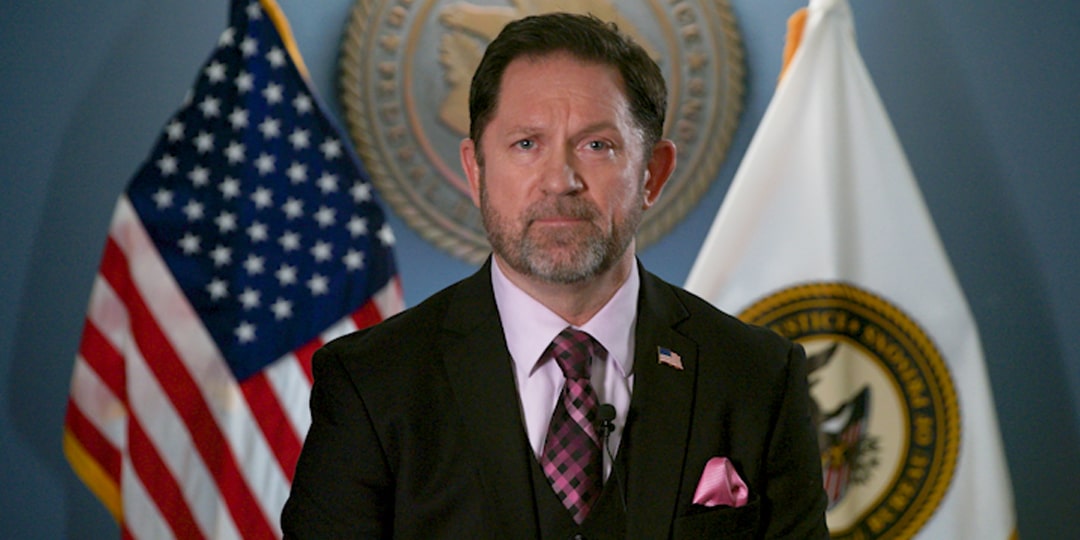
BOP Administration Report Card: the Good, the Bad and the Ugly

There has been a lot going on in the federal prison world as the new BOP administration attempts to address numerous organizational deficiencies that have festered for decades. In October, I offered my initial thoughts on the performance of BOP Director William Marshall (shown above) and Deputy Director Joshua Smith. But those were still early days, and it’s time for another look: 

The Good

Bold and decisive action is needed and some of the administration’s early efforts can be characterized as such. The rhetoric and optics are on point, provided Marshall and Smith consistently follow through with action. 

  1. Smith has followed through on his commitment to visit many individual prisons personally, and we’re hearing that he usually talks to inmates as well as staff members. And while “listening campaigns” are ordinarily spin cycle events with minimal results, some of the on-site visits resulted in actions taken to address issues raised by the incarcerated people he talked to. For instance, some people whose transfer requests had been denied tell us that the deputy director intervened, and the decisions were reversed. Others tell us that Smith gave them waivers that allowed them to receive FSA credits, despite their medium recidivism risk. Still others said that after Smith intervened, they received longer pre-release (halfway house) placements. 
  2. After President Trump’s allocation of $4 billion to address the massive infrastructure maintenance backlog across the system, Deputy Director Smith acted by centralizing about 2,000 facility staff members across the system under his supervision and holding an “industry day” earlier this year, which private sector experts heard from BOP employees about the agency’s most pressing needs. In addition, more inmates are being trained and certified as electricians etc., then paid at rates competitive with UNICOR jobs
  3. There also appears to be more of a focus on rehabilitation, programs and specifically the involvement of justice-involved people.  For example, Deputy Director Smith has invited two formerly incarcerated authors and self-improvement speakers to address inmates across the prison system: Michael Santos of Prison Professors and Damon West.
  4. On a related note, Smith has said that inmates across federal prison will be provided tablets that can be used for both family communication and educational programming. We are waiting to see when that happens and what is actually offered.
  5. It is also a very positive sign to see the BOP host an industry day for manufacturers of body-worn camera technologies. As the BOP reported on its website:  Participating vendors will demonstrate their solutions and discuss potential applications that support the Bureau’s goals, including improved documentation of staff actions…” And in a media interview, Marshall said, “I think [bodycams] could be absolute game changer when it comes to making sure our officers are doing the right thing.” PERA has strongly advocated for the use of bodycams for correctional officers. They are particularly needed in the more dysfunctional institutions with staff cultures that promote inhumane treatment and civil rights violations.
  6. I have long bemoaned the dozens of BOP policies that are out of date or not available on the bureau’s website at all. Finally, Director Marshall is prioritizing these core documents and has updated and issued 30 of them. the recent issuance of over 30 program statements was positive, although we haven’t yet done a deep dive into the specifics of the update. Now, the BOP must figure out a way to assure that staff follow those policies. 

The Bad

However, there are some disappointments as well. There has been little action on the “low hanging fruit” we previously wrote about, such as reducing the cultural barriers to unimpeded communication between inmates and their lawyers, systemic administrative remedy obstruction by staff, and inconsistency in lockdown and MAT practices. 

  1. If the director made legal communication a priority by issuing specific written guidance to the field, that issue could be corrected overnight.  Instead, the frequency of frustrated legal communication has increased. That is simply unacceptable …and correctable.
  2. Likewise, allowing inmates to initiate administrative remedies over the Trulincs system via an electronic cop out would go a long way to expediting the process and allowing progress to be tracked.  In addition, making remedy forms available to inmates without counselors acting as gatekeepers would alleviate the frustration of the population and foster better staff-inmate communication. 
  3. And finally, criteria are haphazard or missing altogether for full and modified facility lockdowns, as well as the implementation of MAT. For the former, a policy is needed that spells out when and how they should be implemented. And for the latter, financial constraints should not decide who receives treatment for their addiction or which treatment they receive. After practically forcing people to accept injections due to the rampant diversion of Suboxone, the agency reversed course due to the cost of the injections and switched nearly everyone to the strips. The result: Diversion is alive and well. In the summer of last year, the BOP removed from its website the clinical treatment guidelines for MAT, titled “Opioid Use Disorder: Diagnosis, Evaluation and Treatment” (dated August 2021). It only recently posted a new document, which fails to spell out guidance governing implementation within the BOP. 

The Ugly

  1. Case manager training and responsiveness is horrendous and unacceptable. It amazes me how little today’s case managers know and the indifference they display toward inmates who looking for answers. One of the most frequent complaints we hear from prisoners continues to be the lack of access to staff and the indifference they experience when they finally get to interact. For example, unit managers are not attending team meetings as required in BOP policy. As a result, unit team meetings, which are the most important element of unit management, are superficial and broken. For example, unit managers do not attend team meetings and team meetings aren’t held as intended. Instead of organizing the required meetings, staff often just slide a paper under an inmate’s cell door. This is counterproductive to rehabilitation and negatively impacts facility safety. 
  2. Likewise, both medical and mental health care are systemically inadequate, in part because staffing shortages continue. Look no further than the recent letter to the BOP from the House Committee on the Judiciary and a document obtained via a recent FOIA request (and posted on our website) documenting extensive medical and psychology staff vacancies (10 psychologists at USP Leavenworth, for example!). We recently zoomed with a former BOP psychologist who resigned earlier this year who told us the entire complex he worked at was down to four psychologists. His resignation was due to the stress associated with being unable to fulfill his clinical responsibilities, as well as pressure to falsify clinical treatment notes to maintain program review compliance. It’s easy for regional and central staff who work in the “crystal palaces,” some of whom have never worked in a prison, to apply such pressure. We also just received a report that FMC Devens has no permanent doctor on staff and is rotating in professionals from other facilities to cover their responsibilities. This may sound dramatic, but these are life-and-death issues that deserve more priority. 
  3. The administration’s response to these shortages has, in part, been a downgrading of medical and psychological care levels. Meanwhile, the 2019 clinical directive on medical and psychological care levels remained on the website until it was finally replaced with a new version in October (and not posted on the BOP’s website until March!). That is the opposite of transparency. 
  4. Like it or hate it, the termination of the BOP’s collective bargaining agreement with the employee union early in the administration has caused an internal revolt; I’m hearing terms like “quiet quitting,” and the most popular comment we hear from line staff regarding the administration is that it is a dumpster fire. Rank-and-file employees are the backbone of the agency; when you lose them, you lose the agency. 

It is still early days for this new administration, given the enormity of the problems facing the BOP.  The optics are good and some substantive action has occurred. But in the end, we will judge the administration when the repeated complaints of civil rights violations decrease significantly.   

BOP Finally Begins Updating Ancient Policies

Ever since BOP Director William Marshall terminated the agency’s collective bargaining contract with the union, I’ve been waiting for a barrage of policy updates. After all, the union allegedly was one of the most significant barriers to new and updated policies. However, there was minimal movement on the issue until early March, when 10 policies dated February 26 hit the agency’s public website. Another 23 were dropped several weeks later, all dated March 19.  

Reintegration Units

Of the first 10 revised policies, there are only two of interest from a correctional programs perspective. The first is an update to PS 52801.01 Reintegration Units. Previously, there had only been an operations memorandum (which expired in 2017), not a formal policy. As one RU resident at USP Atwater told us, “The rules are now pretty much the same as how they were running it. But now it’s in black and white so they can’t just make up things as they go along. And if they don’t do something that’s in the rules, such as putting us in for transfers to medium-level facilities at 24 months, we can file and quote the program statement chapter and verse.” He added that he likes that the new program statement makes it clear that the captain and SIS officer are authorized to remove people removed from the RU if they repeatedly cause problems. “We had a guy that kept going to the SHU for having a knife but they would just let him come right back to the unit,” he wrote. “Now he’s being sent to another facility, so he won’t cause problems for the inmates here who are trying to do the right thing.”

Employee Misconduct

Another policy change that is significant, but in a potentially negative way, is PS 1210.06 Office of Internal Affairs. This one is a bit comical to read at first, since staff has always been required to report any misconduct by other staff members that they observe. Yet based on the nature of many emails sent to our organization, it does not appear most BOP staff members are adhering to the reporting rules. If they did, I’m certain augmentation would grow exponentially given the exodus of staff – both voluntarily and by termination.

What is worrisome is that a section labeled “Alternatives to Investigation” allows wardens the option to informally resolve Classification 3 allegations of staff misconduct themselves, without referring them to the OIA for investigation. [The new policy calls it a “misconduct diversion program.”] Although Class 3 allegations are considered as “ordinarily having a lesser impact on the institution,” these types of misconduct include failure to follow policy, inattention to duty and unprofessional conduct – all of which can be serious. While this change could mean that problems are resolved more quickly than under the previous policy, it also means that no public record or higher-office notice will exist for the issues reported and the employees involved may not be disciplined or learn the required lesson. 

‘Director’s Discretion’ and FSA credits

In the most recent list of updated policies, I’m disappointed in PS 5162.06 Categorization of Offenses. The revised policy updates the list of statutory offenses considered violent, based on the First Step Act. Unfortunately, it also continues to include the controversial “Director’s Discretion” exemption, which – if used – will preclude early release from prison after completion of RDAP under 18 USC 3621(e). When “director’s discretion” is applied, the BOP is allowed to deny early-release benefits for uncharged behavior associated with an individual’s conviction. For example, if a person’s pre-sentence report states that someone possessed a gun at the time of his crime, but he was not charged with gun possession and his sentence wasn’t even enhanced, he could still be denied early release after completing RDAP. 

Note that unlike the Second Chance Act, the FSA does not reference the director’s discretion authority. However, I have long been concerned that the BOP would invoke it to make it difficult for inmates with medium and high recidivism risk to receive FSA time credits. That concern led me to reach out to BOP staff; I received the disturbing email below on April 6.  Be forewarned! 

Mr. Donson: 

It is our understanding that the section regarding “Director’s Discretion” MAY affect FSA credits. Once DSCC updates the FSA-disqualifying offenses, those deemed appropriate, based on Section 4, will be ineligible for FSA. FSA eligibility based on current offense utilizes offense codes for automatic exclusion.  We will not know how this affects discretion cases until the ineligible offenses are updated. Currently, if an offense is ambiguous or does not match the exclusionary offense codes, it is sent for a second review by Legal. Our office expects this to continue, as well as to include the Director’s discretionary factors.  

 I hope I’m actually answering your question.  This is as much as we know, at this point.

Other updated policies of interest included those for Secure Mental Health Units, Suicide Prevention Program, Sexually Abuse Behavior Prevention and Intervention Program,  Life Connection and Threshold Programs, Records and Information Management Programs, Physical Capacity for Bureau Facilities and Request To Staff, Inmate.

The BOP actually has many sound policies that merely need an updated review and a public posting, for the sake of transparency. The real problem is for management to figure out a way to force staff to follow them! That can only happen with staff accountability, transparency and leadership. I’m not holding my breath.   

2025: Stability, and a Foundation for Growth

Our hopes for a more just, safe and peaceful world can only be achieved when there is universal respect for the inherent dignity and equal rights of all members of the human family.” Phumzile Mlambo-Ngcuka 

As we head into the new year, I want to celebrate our achievements in 2025 – none of which would have been possible with the many people who have supported us by donating, volunteering, referring others our way, etc.  

Here are a few highlights from 2025: 

We had a productive year, positively impacting myriad incarcerated people, their families and the broader justice community. We began 2025 by bringing on more consulting clinical staff, thus growing our fee-for-service revenue, and ended it with a strategic-planning retreat to help bring us to the next level for an even more productive 2026. Our strategic plan, now in development, will enable us to approach funders to demonstrate that we have a sound growth strategy to build the infrastructure needed for even greater impact. 

Throughout the year, we conducted training sessions for the Administrative Office of the U.S. Courts (AOUSC), defender organizations and even the U.S. Probation Office in the Eastern District of Pennsylvania. In addition to our basic BOP-related training for attorneys, we conducted two national training sessions for the AOUSC on transgender issues and a webinar for paralegals, investigators and other court support staff. 

In the spring of 2025, we were awarded a $50,000 state grant as a co-applicant for the preliminary planning of a day treatment center in Pennsylvania. (It is a long-term goal for PERA to pilot programs like this as a prison-diversion strategy or rehabilitation option for halfway house residents.) In the summer, we participated in a New Jersey district-wide training for federal judges. We also executed a retainer agreement for the Western District of North Carolina to support its clients with declarations and general BOP-related issues. 

In the fall, we engaged with various ACLU attorneys, both on a pro bono and fee-for-service basis, to support First Step Act (FSA) litigation as well as actions supporting individuals who had been given the death penalty before former President Biden commuted their sentences. These individuals were moved to USP Terre Haute, and now President Trump is pushing to send them to the ADMAX, the only facility where true solitary confinement is enforced 24/7. 

Throughout 2025, we maintained active correspondence via the BOP email program, helping hundreds of federal prisoners navigate the system within the BOP policy framework in a professional and non-adversarial manner. We regularly engaged with BOP support coordinators and higher-level bureau officials to significantly aid individuals and families. For instance, a retired BOP chaplain reached out to us who had been inappropriately terminated as a volunteer, and we intervened to help him be reinstated after we brought the case to the attention of central office management. We also were able to help a person who had been housed in the SHU for over 14 months, resulting in his transfer to another facility’s general population.

We are continuing to grow our network and reputation and have become a go-to organization for the media, law clinics, politicians, CJA panel attorneys and numerous defender organizations. We were even invited as a stakeholder to provide input to the DOJ regarding its Access to Justice Initiative and the Federal Prison Oversight Act. The GAO also solicited our feedback on tits ongoing review of First Step Act implementation. 

One priority currently under development is a post-conviction support initiative that I hope to formalize with a law clinic and possibly another organization. Most promising is our meeting with NYU’s Jailhouse Lawyer’s Initiative (JLI) to collaborate on a pilot to provide legal support and education. We have already been able to get a few attorneys assigned to individuals who reached out to us for assistance, including an FSA case that was recently argued in the Third Circuit. Our declarations have assisted in the release of individuals with compassionate release cases, and judges have often cited our declarations in their decision-making process.

We continue to attract technical experts who want to make an impact and we now have a retired BOP medical doctor, former BOP psychologist, and a recently retired USPO sentencing guidelines expert complementing our existing staff. We continue to be fortunate to have compassionate people involved with the organization, as volunteers or at discounted rates, allowing $100 of every billable hour to be allocated to extending our services to those who would not be able to pay. We started the year struggling to make payroll but ended the year with approximately $27,000 in the account (and several billings pending receipt).   

But what really demonstrates our impact more than any meetings or dollars are the words of those we have assisted:

We won that parole case. You are like my magic wand. I’m so grateful for your time, educating both me and that parole board member. He had never recommended anyone for parole before… but he recommended my client for parole, and Mr. _____ is coming home after 40 years.”

I know that PERA can develop into the primary federal prison stakeholder in the country and significantly impact the federal justice community. We have made steady progress, and the strategic plan and our relationship development with high-profile stakeholders will grow our organization and impact even more. The impact we could collectively have on a broader scale once we have the financial support for our business infrastructure is endless. Donate what you can now and share this email with others who care about the cause!

With gratitude!  

Jack T. Donson, Executive Director

Transparency That’s Hard to See

With all the BOP press releases on and talk about transparency, there are so many ways in which the agency hasn’t stepped up to the plate. The agency continues to govern by internal memoranda and word of mouth, rather than by public policy updates. And that leads to exploitation and inconsistency across prisons – further harming the agency’s reputation. 

PERA considers transparency one of the low-hanging wins that could be easily achieved; yet to date, it appears to be getting only superficial lip service.   

Secretive changes

A recent example is the downgrading of medical care levels. That could very likely mean people with acute or chronic illness will be housed in prisons with less of an ability to care for them. Yet the directive and the new criteria used to determine medical and psychological classifications have not been communicated to the public via the agency’s website, which still contains the previous clinical treatment guide from 2019, titled “Care Level Classification for Medical and Mental Health Conditions or Disabilities.” 

Other documents that have historically been available also have been removed from the BOP website, such as the clinical guide for medication-assisted treatment of opioid abuse disorder. This removal appears to have occurred in conjunction with an abrupt shift away from the use of an injection to treat addiction to an oral medication that is much easier to divert. The reason: cost savings. 

Also notable is the removal from the website of the BOP’s national formulary, a critical document listing which medications the agency will allow medical professionals to prescribe. Historically, the document has always been posted on the BOP website so people could prepare for treatment shifts prior to incarceration. The formulary is important for prisoner advocates as well as to inmates who want to file administrative remedies.  

Recently, a team from BOP headquarters visited the Victorville complex in California and reportedly made some medium- and high-risk inmates eligible for FSA time credits. While these on-the-spot modifications have good PR value, the more systemic issue is what are the new criteria that made them possible, and why haven’t they been communicated via a public change notice to PS 5410.01 [FSA-Time Credit Procedure for Implementation of 18 USC 3632 (d)(4)] as required by the BOP policy on directives management? Internal communications are reportedly being circulated by the regional offices and rumors are running wild. This lack of transparency not only feeds rumor that raise expectations, but also is exploited by disreputable consultants that solicit business from hopeful families. 

Outdated, inaccurate public policies

Another stark example of the lack of transparency is that the core document on RRC (residential reentry centers) placement, PS 7310.04 (Community Correction Center Utilization and Transfer Procedures) has not been updated since the Second Chance Act was passed by Congress in 2007. I’ve been beating a dead horse in this specific issue for many years now to no avail. Although the BOP general counsel wrote  internal memoranda on implementation of the law, the agency never issued a change notice to update the policy. That’s simply not transparency.  

PERA has also received complaints about FCI Beaumont in Texas, which has discontinued weekend visits – a direct violation of the CFR. When we raised the issue with the BOP’s regional support coordinators, we were informed that it was only temporary due to a staffing shortage. (No notice to that effect is posted on the prison’s website.) However, we discovered that another complex – the entire Hazelton campus in West Virginia – has permanently eliminated weekend visits. 

The BOP has also removed prisoner handbooks from facility websites. Historically, handbooks were frequently outdated, but at least they were posted. Handbooks are a comprehensive guide to many facility issues that are beneficial for families and people who surrender directly to a prison. 

The underlying problem

The broader, systemic issue is regarding the agency’s inability to adhere to PS 1221.66, the Directives Management Manual, which requires it to issue change notices and operations memoranda for the changes in practice that are not in accordance with current policy. 

The new BOP administration is talking a good game, but the reality is lagging. Systemic change and a cultural shift can only come about by restoring agency credibility, and that starts with greater transparency.

‘My Property is Missing!’: What to Do When Belongings Are Lost or Stolen

Two incidents were reported to us recently, illustrating how personal property can go “missing” when incarcerated individuals are sent to the SHU or transferred to another facility: 

WH: I was sent to the SHU for five days for what turned out to be a baseless investigation. While I was in the SHU, my entire locker was emptied. The inventory sheet was marked “locker found unsecure.” But I never left my locker unsecured. 

My locker caddy was folded up and thrown in the trash, and everything that had been inside was gone. I estimate the value to be just over $254 in personal property, plus eight books a friend sent me.  I’m talking hygiene products; writing materials; bags of coffee and unopened seasoning bottles; unopened shirts from the commissary that I was saving for when I leave prison; stamp books – I could go on.

—-

MB: One night, two lieutenants strip searched and shook me and my cellie down. Several days later, it happened again, with one lieutenant and three COs. It was so bad, they moved us to another cell in a different unit. 

Later in the month, there was a unit-wide cell search for five hours. It was the start of a unit lockdown for a month. We received no showers or anything. While we were still on lockdown, we were all moved to the gym for another mass shakedown, and they found a phone in my old cell. So, they sent me and my cellie to the SHU. Before we left, we packed all of our property in two commissary bags each and left them in the cell. A CO brought the bags upstairs to the cage that is supposed to be locked at all times. I asked six to seven staff to bring my property to my cell so it could be inventoried. But they just kept spinning me.

While I was in the SHU, men coming in told me that the cage had been left open, allowing inmates to steal all of my property. They told me, “Hey I just want to let you know that people are stealing all your stuff. Two guys are selling your wife’s pics as jack pics and some of your homeboys found your kids’ pictures in the trash.” Half of my photo albums are of family and friends who have passed away since I came to the feds in 2019. Also in my property were my wedding ring, court transcripts and eye contacts, without which I am legally blind. I was told it would take up to three months before I could be seen for a new prescription. 

I was in the SHU for four weeks. Staff never did anything, however. I even gave them the dates and times so they could check the surveillance cameras. 

Unfortunately, protection of personal property is difficult to proactively manage. These two case studies illustrate what can happen when staff don’t follow BOP policy and procedures. And when that occurs, there is not much that can be done. In WH’s case, it is difficult to prove that the individual’s locker was indeed locked (thus protecting his property from other inmates until an officer inventoried and stored his belongings). 

As for MB’s case, there isn’t a dedicated camera for the property room. Although a camera in the area might have picked up what transpired, video is generally not kept for more than three weeks. (And short of a court order, it is difficult to obtain; no one wants to release evidence of staff malfeasance.) LIkewise, filing grievances often merely causes hostility – as MB later discovered. 

The only recourse these two individuals have is to file a tort claim for the missing items. That is why it is so important for inmates to save their commissary receipts. If they can’t prove the value of their possessions, they can’t file a tort claim. (Past receipts are available from the commissary only for the current fiscal year.) And yes, that means there is no compensation possible for sentimental items like MB’s wedding ring. Note:

  • Tort claims must be filed within a year of the incident.
  • No more than $1,000 can be sought. 

What prisoners can do to protect themselves

There’s not much that could be done in advance by MB and WH to prevent what happened. But that’s not true for everyone. Here are some tips:

  • Fundamental to property protection is to never leave a locker unsecure. Too often, prisoners leave their lockers unlocked, which can lead to property theft as well as the planting of contraband by a staff member or another inmate. 
  • It’s also advisable for prisoners to have an understanding with their cell mate about what to do if they unexpectedly go to the SHU or are shipped out. For instance, if an inmate doesn’t return to their cell for a count, their cellmate should secure their locker immediately as a protection against theft.  
  • Always retain commissary receipts, especially for more expensive items. 

What BOP policy says

While BOP policy calls for officers conducting a shakedown to leave cells like they found them, that does not always happen. And when inmates are sent to the SHU, officers are supposed to secure their lockers and/or cell doors as soon as they are notified of the move. The shift officer is required to conduct an inventory. Then, the compound officer takes it to the property room in the SHU. Again, that doesn’t always happen. Property rooms are equipped with lockers that should be secured, and BOP policy states that staff “shall” provide inmates with a copy of the inventory form “as soon as practicable.” The inmates should then sign the form, signifying receipt of the inventory and its accuracy. A copy of the inventory must also be placed in the inmates’ central file.

Note that opened, perishable items are typically not packed up. The same goes for any items that exceed the allowable number. For example, prisoners are only allowed to have up to five books in their cells at any one time. (There is also a limit on what a person can have in the SHU, depending on whether a person is there for administrative detention [investigation, personal protection, etc.] or if they are in disciplinary segregation as a sanction.) 

A few related suggestions for handling problems:

  • The BOP’s special housing unit policy restricts what personal property can be brought into the SHU. 
  • All property-related concerns should be addressed to the SHU property officer. If that individual is not helpful, go to (in this order) the segregation review official (SRO, which is usually the SHU lieutenant), the SHU captain, the assistant warden for programs and the warden. Executive staff members are required to make SHU rounds weekly. If possible, property issues should be brought to the attention of the captain in front of the assistant warden for programs and/or warden during these rounds.
  • However, avoid being adversarial with SHU officers, or they may leave your property unsecured and thus vulnerable to theft by the SHU orderlies (as happened to MB).
  • File a grievance/administrative remedy only as a last resort, since this further creates hostility.

Treatment of property during transfers

The other time personal property often becomes an issue is when prisoners are transferred from once facility to another. BOP policy states:

“Personal property shall be shipped by staff to the receiving institution, with the exception of legal materials for active court cases and some other items deemed “necessary or appropriate” by by staff. These may be transported with the prisoners. 

Staff of the sending institution ship authorized personal property via bus, van or airlift directly to the receiving prison. Ordinarily, no more than two boxes of property (with the exception of legal materials) will be shipped at government expense for each inmate. However, prisoners may elect to pay for the shipment of additional boxes. 

R&D staff at the sending prison are responsible for recording all personal property that will be shipped to the receiving institution on an inventory form. The inmates should certify that the form is accurate and be given a copy to take with them. Without that form, it is difficult to prove that property was shipped if it later goes missing, or to file a tort claim.

Generally speaking, it should take no longer than a week or two for prisoners’ personal property to reach the final destination. If a month has elapsed and it has not been delivered, the inmate should approach a correctional systems staff member and ask that its status be investigated. Is it in the property room at the new prison, and just has not been given to the inmate? If not, the inmate should ask that the staff member call the transferring prison to inquire about the property’s status, and track it if necessary. If the correctional systems staff is unwilling to assist, a family member may contact a BOP regional support coordinator and ask for assistance. 

Remember:  Creating conflict with the correctional systems staff sometimes results in property being sent to the wrong institution, disappearing altogether or being “lost” in the sending facility’s property room.  If inmates are adversarial with staff, there is nothing but downsides! Inmates should try to maintain their composure no matter how far staff deviate from the policy and process. Never stoop to the level of staff. 

Carve-outs Create a Class of ‘Unlucky Ones’ in the BOP

In the midst of the laser focus on the First Step Act by the new Bureau of Prisons administration, I feel compelled to shine a light on the people left behind by that law, but who are no less worthy of redemption and no less able to be rehabilitated. I am speaking about the “carve-outs.” 

Why we got to where we are today must be understood in the context of the tough-on-crime era that originated in the 70s but gained momentum during the crack epidemic of the 80s and 90s. Prior to this period, prison systems typically adhered to the traditional parole model, in which people were sentenced, then – after a specified period of time – were assessed for early release by an independent parole board based on their conduct and rehabilitation. 

But, as states began to pass “truth in sentencing” laws (fueled by public officials and others who wanted people who commit crimes to serve their full time), parole was slowly abolished. The federal government followed suit with the 1987 Sentencing Reform Act (SRA), requiring prisoners to serve 85% of the full term imposed by the court. The SRA, often referred to as the “new law,” limited judges’ discretion and created controversial sentencing guidelines (including mandatory minimums). Offenders were sentenced based on factors such as the severity of the act and their criminal history. The length of the prison term was considered the punishment and people were treated equally once imprisoned (at least from a sentencing-structure perspective).  

And then came carve-outs.  In legislation, a carve-out is a provision that excludes a specific group of people from its benefits or other provisions. In criminal justice at the federal level, they first surfaced with the Residential Drug Abuse Treatment (RDAP) and Intensive Confinement Center Programs in the 1990s. Participants who successfully completed the programs were eligible for early release – except those who had committed violent crimes. Advocates who pushed for the bill accepted a compromise that set a bad precedent from which we’ve never recovered. When the First Step Act (FSA) was passed in 2018, similar carve-outs were included.  That means an estimated half of federal prisoners are ineligible for the early-release benefits, watching their peers leave while even the few crumbs of incentives they qualify for (like near-release transfers) are often unobtainable.

What justifies labeling people as “violent” for the rest of their lives, often for one act often committed decades ago? Who decided that white collar offenses are less damaging to society as a whole?  To me, it is at least as traumatic, and with arguably greater lifelong consequences, to lose your life savings by fraud than to be robbed at gun point. I’ve interacted with so-called “violent” people in the prison environment for decades and they are no different from the people I oversaw at a federal prison camp. Having read hundreds of pre-sentence reports, which often revealed patterns of childhood poverty, physical abuse, absent fathers and a childhood in crime-ridden neighborhoods, I actually found myself respecting many who had committed violent acts even more than those who faced less adversity. It’s hard to accept that a sociopathic fraudster who grew up in a life of privilege and may steal the last penny from an elderly widow the minute they are released can get the early-release benefit, while an older adult from the “hood” is labeled and excluded based on his worst act. We truly have created an us vs. them justice culture that politicians capitalize on in legislation. 

The research backs me up. For example, the results of a 2023 meta-analysis found that the odds of violent recidivism are 24% lower for individuals who participate in interventions – thus meriting incentives for completion of such programs.  

The FSA has become a huge distraction for the BOP as its new administration scrambles to fix the unmitigated disaster it has become even for the individuals who qualify. As I’ve addressed in other blog posts, the BOP is now issuing conditional release dates to remedy issues that could have been addressed under its discretion many years ago. We are nearly seven years into implementation of the FSA and lawyers continue to be forced to bring suits to assure that prisoners get the time credits they deserve. The resulting frequent adjustment to BOP procedures is leaving case managers the scapegoats for administrative mismanagement.

However, the bigger picture that is not getting any attention is the fact that the agency is hyper focusing on the population who often needs the least support while the prisoners with the most rehabilitation needs are left behind in violent carceral settings that are void of meaningful programs and are characterized by continuous lockdowns and inhumane treatment.   

While the chosen few reap the spoils of early release, it’s time for the advocacy world to rise up and demand legislative fixes such as a “second step” law that does not discriminate based on the nature of the crime. The term “violent” as a descriptor for people should be removed from the advocacy lexicon and carve-outs must end!                                            

From Mail to Legal Calls, BOP Bends Rules to Block Prisoner Communication

The BOP is increasingly deviating from policy, the Code of Federal Regulations (CFR) and even its own past practices in its obstruction of inmate communication, even with their lawyers.  

These growing restrictions have been subtle and incremental, but systemic. The significant delays in mail delivery were initially attributed to the introduction of contraband, such as suboxone and K-2. One such incident occurred in August 2024, when a mailroom officer at USP Atwater died after reportedly being exposed to a toxic substance on a letter. That death triggered further restrictions on mail processing at federal prisons across the country. 

Although the BOP conducted an official pilot program in which incoming mail is copied, then distributed, it wasn’t institutionalized via law or policy change notices. This lack of clear, written guidelines has resulted in a lack of transparency and inconsistent practices among facilities, usually at a warden’s whim.  

And these issues do not just interfere with the mail. Policy and practice deviations impact communication via telephone and email as well. PERA staff members regularly correspond with hundreds of incarcerated people and their family members, as well as attorneys. The frequency of these complaints has noticeably ramped up. What we are hearing:  

Delayed and missing postal mail

Postal-service mail (both personal and legal) is delayed weeks or months, and sometimes totally disappears. Mail theft and/or destruction is a crime. When we receive repeated reports about one prison, it is simply too coincidental to think that post offices are losing it. (In the case of our collaborator at More Than Our Crimes, Pam Bailey, none of her letters to her network members at FCI Florence were received!)  
 
When letters are rejected, the CFR requires that both the sender and the recipient be notified (and the correspondence returned). The CFR included in the BOP policy statement titled Correspondence states:  

“§540.13 Notification of rejections. When correspondence is rejected, the Warden shall notify the sender in writing of the rejection and the reasons for the rejection. The Warden shall also give notice that the sender may appeal the rejection. The Warden shall also notify an inmate of the rejection of any letter addressed to that inmate, along with the reasons for the rejection and shall notify the inmate of the right to appeal the rejection. The Warden shall return rejected correspondence to the sender unless the correspondence includes plans for or discussion of commission of a crime or evidence of a crime, in which case there is no need to return the correspondence or give notice of the rejection, and the correspondence should be referred to appropriate law enforcement authorities.” 

Limits on books

Hard cover books are routinely rejected by most federal prisons, despite being allowed in BOP policy and CFR:  

540.71 Procedures. (a)(1) At all Bureau institutions, an inmate may receive hardcover publications and newspapers only from the publisher, from a book club, or from a bookstore. The sender’s address must be clearly identified on the outside of the package. (2) At medium security, high security, and administrative institutions, an inmate may receive softcover publications (for example, paperback books, newspaper clippings, magazines, and other similar items) only from the publisher, from a book club, or from a bookstore. (3) At minimum security and low security institutions, an inmate may receive softcover publications (other than newspapers) from any source.” 

Granted, this policy has not been updated since 2011 (almost all BOP program statements have not been revised in a decade or more), but it is still on the books. And while prisoners tell us staff cite difficulty in checking hardcover books for contraband, there is no logical reason why a few federal prisons can safely receive hardback books while others cannot. 

And then there are three prisons (that we know of) that are essentially banning the receipt of books altogether: USP Lee, USP McCreary and FCI Allenwood Medium. From what we hear, inmates can only order books themselves, directly from publishers. It’s a process so unwieldy that the effect is to limit inmates to the books in the prison library.

Obstructed legal communication

Equally concerning is the limitation of legal communication for people involved in post-conviction litigation. A lot of post-conviction litigation has been filed since Covid and over First Step Act violations, and the need for legal communication has drastically increased. Yet inmates and attorneys asking for legal calls are being outright denied and/or asked to prove an imminent court deadline (although that is not required). BOP policy only calls for this limitation when lawyers or their clients make repeated requests in a short period of time:

The inmate is afforded the opportunity to place an occasional unmonitored call to his or her attorney. Based on these provisions, frequent confidential inmate attorney calls should be allowed only when an inmate demonstrates that communication with his or her attorney by other means is not adequate. For example, when the inmate or the inmate’s attorney can demonstrate an imminent court deadline.”  

Note the word “frequent.” However, we’ve heard from people making first requests for a legal call being asked to provide documentation of an imminent deadline! Dig a little deeper, and you’ll see that the CFR within this policy states: “The warden may not apply frequency limitations on inmate telephone calls to attorneys when the inmate demonstrates that communication with attorneys by correspondence, visiting, or normal telephone use is not adequate.” The CFR is a bit archaic, considering its reference to postal-service mail (which is often slow and delayed) and the inference that communication can be accomplished via a personal visit (which assumes the client is in a local facility, instead of 500 or more miles away). Lastly, suggesting “normal” telephone use implies it is appropriate to conduct protected legal communication on a monitored line. That is unacceptable.  

Email blocks

There is also an increasing practice of restricting email communication via Corrlinks, with advocacy organizations among the targets. We have received many credible reports of staff intimidating and even retaliating against people who correspond with advocates when they identify/expose staff misconduct, etc. Pam Bailey, our More Than Our Crimes collaborator, filed a lawsuit against the BOP to stop it from blocking such communications and the judge has declined the agency’s effort to have it dismissed. And yet the harassment continues. Recently, three individuals got word to her that they were blocked from adding her to their contact lists, then thrown into the SHU for “investigation.” 

All of this is in addition the recent BOP ban on group emails, which effectively puts a stop to newsletters from advocacy and legal-update newsletters.

Just what is the BOP so afraid of? 

The New BOP Administration Assessed: So Far, So Good

I have been critical of BOP operations based on what I see at the ground level, especially over the past few years. But while I am skeptical of some of their press releases, photo ops and listening tours, the new administration has been responsive to the issues we have brought to its attention. It’s the first administration that hasn’t ghosted us and has acted on issues we bring to their attention. We are encouraged that some of their early emphasis is on issues we focus on and write about – mainly leadership!

For example, one of my criticisms has been how wardens are chosen on their ability to follow rather than lead and have far too much power.  When the agency was progressive, the leadership consisted mostly of college-educated professionals with a correctional programs background and orientation. However, during the tough-on-crime era and build-out of the federal prison infrastructure, the emphasis became incapacitation rather than treatment. This, in combination of the difficulty to filling positions, lowered the bar for candidates and created conditions that were ripe for abuse.

That’s why I was encouraged to see Director Marshall make warden selection and training a priority, acknowledging that promotions based on a resume and “who you know” are a disservice to everyone.

I am personally aware of people who could barely put two sentences together having their subordinates write their applications for leadership positions. It’s toxic when combined with the “daddy” system – in which yes men and women follow their sponsors around the system, then into the private sector of the prison-industrial complex. Wardens should not be given carte blanch authority like an unchecked king.

I was also heartened by Deputy Director Smith’s video about increasing the monthly telephone minutes available to prisoners from 300 to 510. To be honest, that should have been the case for a while now, since it was called for by the First Step Act. And while he’s at it, I would like to see more telephones and computers installed in the prisons, due to the increased demand generated by this change. This is especially true in the high-security facilities, where they are locked down so frequently and the telephones are controlled by certain cars.

I’d also like to note that a blog post published on the BOP website indicated the Director Marshal and Deputy Director Smith recently visited the Colorado Supermax (ADX) prison. Unlike the releases issued for previous visits, this announcement didn’t reference any interaction with the inmate population. We hope they did meet with a few of them or at least reviewed the status of the people held there. There have been many individual in the ADX for long periods who policy dictates should have been stepped down to alternate housing.  The façade of inmate program reviews at the ADX should be looked at by the administration, just as it should examine the practice in mainstream prisons, where a paper is slid under a cell door to suffice as a program review. 

Missing from the BOP press releases is any talk of the Federal Prison Oversight Act and the independent ombudsman that is so needed as a check on internal abuses. PERA stands ready to offer support of and feedback on such an ombudsman once it’s created.

Bottom line: The new administration is saddled with the remnants of the dysfunctional management dumpster fire that took hold over the past few decades. And I remain skeptical of the reform efforts until I start seeing more proof on the ground, but so far so good.

Open Houses and Mainline: When Communication Between Staff and Prisoners Breaks Down

PERA prides itself on our ability to informally resolve issues between inmates and staff in a non-adversarial manner via our deep familiarity with both prison policy and culture. The first and most important principle we adhere to is respect for the official process. That starts with the unit team in what is referred to as “open house” – set times when key personnel are supposed to be available to inmates and their issues. Unfortunately, however, we too often hear complaints like this one from FCI Waseca (Minnesota).

“Our case manager doesn’t like to see us, even when she has open house. She has her open house from 8:30 to 9:30 a.m. during census, when some people can’t leave work. She even makes personal calls during her open house. [But] she won’t see us at any other time. When she is not having open house, which is a lot, she’s hanging out with the other staff just talking, taking almost 2 hours to eat lunch. She does the bare minimum.”

The problem with open house

It’s important to understand two points about the open house and communication with prisoners in general: Prisons built before the 1990s were designed to include staff offices on the ranges, within sight and easy reach of the inmate population. Yes, open houses were held then too, but most case managers were more accessible throughout their shifts to deal with issues – frequently “walking and talking “with the population. This created a positive treatment relationship and safer environments because it was also a way to gather intelligence.

In contrast, facilities built in the 1990s and on located staff offices between the units, behind steal doors, with limited access to the population. (The exceptions are therapeutic program units like Challenge, RDAP and BRAVE. where clinical coordinators have offices in the same space.) That means the open house is it.

Too often, open house consists of opening of doors for exactly one hour, inmates line up, and staff hurry them in and out if they even show up. It is a less-than-ideal way to communicate, especially on sensitive issues. One of the complaints we often receive is that when the hour is up, the door closes regardless of who is still waiting to be seen. That demonstrates indifference, especially since many unit team program reviews are simply a case manager sliding a report under a locked door for an inmate’s signature.

What’s missing in this picture is the lack of unit management oversight. Word about staff who are indifferent and lazy gets back to management. Staff members know who the slackers and doers are. It boils to down to a management supervision issue. However, working against that is the fact that unit managers’ caseloads are so large it provides an excuse not to be present at team meetings and/or to be unable to hold their staff members accountable. For anyone who noticed, when the BOP released its new unit management manual earlier in the year, it was combined with the inmate program review directive. And one of the changes requires the unit manager to be present at unit team meeting. I’d be curious to know how many unit managers are present when the case manager slides the paper under the cell door?

Try ‘mainline’

When the unit team is not responsive or available, “Mainline” is the alternative. This is when department heads and executive staff stand in the dining hall during lunch time. It is designed to offer inmates access to the executive staff to ask questions and/or raise issues after they have exhausted the chain of command within the unit team. To take full advantage of mainline, it is important to know which associate warden is over which departments, as well as who the department heads that supervise specific programs. For instance, email and commissary are under the trust fund supervisor, who ordinarily reports to the associate warden of operations (the AWO).

Too often, when I tell incarcerated people to go to mainline, I am dismissed as if it is always ineffective. However, many things can be accomplished via mainline if a person approaches the participants in a professional and non-adversarial way. It is critical to not allow frustration to come across as combative, to avoid citing policy too quickly or referring to unit staff in a less- than-flattering way. I advise people not to get down to the level of staff members if they are unprofessional and just move on to the next person in the chain. Communication style can either get goals accomplished or cause a deeper divide. 

The Consequences of Too Much Self-Improvement

In the never-ending saga of the BOP’s First Step Act implementation, it is difficult to keep up with the myriad issues being reported from around the prison system. This blog post focuses on non-time credit incentives – specifically, free phone minutes in return for completing eligible programming. We are now receiving reports from people who have programmed like rock stars, and thus no longer have a documented need for such self-improvement. Consider this email received by our partner organization, More Than Our Crimes:

Come December 13, I will have been incarcerated 18 years. On January 3, the BOP began offering 300 phone minutes a month in return for programming based on the needs identified by your unit team. I am not receiving them because I no longer have needs!

I have programmed constantly throughout my time in prison. To date, I have completed over 3,000 hours of educational and psychological programming. I even requested a transfer to a Virginia institution, on the other side of the country from my home, so I could participate in a residential program unit solely focused on lowering recidivism. I am prioritizing my own rehabilitation.  

Yet I have been told by staff that because I have met all my “needs”, I am not eligible for the incentive/free phone minutes. A staff member informed me that because of the way the system is set up, I would literally have to do something to get myself sent to the hole (SHU) — like punching someone in the face and thus needing anger management classes – to qualify for the incentive. What sense does this make?

I have a life sentence (which I am working on changing), but I continue to program and follow the rules. I am a mentor and role model for others. It’s frustrating that the BOP is discouraging my good behavior, while limiting my ability to stay in contact with my family. 

To fully explain this situation, I need to get a bit technical. When a person arrives at a  designated federal prison facility, they meet with their unit staff within the first four weeks. At that meeting, staff identify evidenced-based recidivism-reduction (EBRR) programs and productive activities (PAs) the individual would benefit from.  Their recommendation is based on assessments  from various departments of 13 risk/need areas* related to reducing their criminality profile (a tool called the SPARC-13). For each inmate, a “Y” (yes) or “N” (no) is keyed into the computer for each of the 13 factors. For instance, drug treatment would be recommended for the “substance abuse” need if the inmate has a history or active practice of misuse. (Note that the data for much of this assessment comes from the individual’s pre-sentence report.)

What has long been our concern is that the BOP has the discretion to only award incentives for inmates with at least one “Y” from the unit team. So, as inmates complete programming, staff have the discretion to change the “Ys” to “Ns”.

While it sounds counter-intuitive to penalize people who address their risk/need areas, the rule was probably intended to reduce program waiting lists. Anyone who remembers the implementation of early-release incentives for the Intensive Confinement (ICP) and Residential Drug Abuse Treatment (RDAP) programs understands the disastrous consequences of extensive waiting lists, including reduced early-release benefits (because of not getting into the program soon enough) as well as the manipulation of the queue by the chosen few.  

Academics, politicians and beltway organizations who are disassociated from the reality of prison sub-culture probably don’t understand that people without means will indeed commit infractions, if necessary, to create a new need and allow greater family communication. If they can’t get the free phone minutes, they  may also turn to illegal cell phones. While we haven’t yet received complaints about the inability to earn FSA time credits for the same reason, I expect we will.

Meanwhile, a problem that gets lost in all of this is the BOP’s misrepresentation that people with the greatest risk of recidivism (those in high- and medium-security prisons) are prioritized for program placement.  I continue to see individuals in high-risk penitentiaries sit on waiting lists for years. Likewise, people who are ineligible for early release spend nearly 85% of their time in violent environments (USPs) with minimal  access to programming due to the frequent lockdowns. How does that make correctional sense?

It was during the failed “tough on crime” era that the government created carveouts that differentiated by charge and imposed sentence that created the impression that they were “taking action.” The length of the sentence itself is the punishment and is based on the totality of the criminogenic circumstances. Once incarcerated, people should be treated equally from a sentence-structure perspective.

PERA’s position: Once entering the carceral system, everyone should be treated equally — including the eligibility to earn early-release benefits.

* The 13 areas include: • anger/hostility • antisocial peers • cognitions • dyslexia • education • family/parenting • finance/poverty • medical • mental health • recreation/leisure/fitness • substance use • trauma • work. Both EBRR programs and productive activities that correspond with the specific risk/needs can be found on pages seven through 10 in the approved programs directory.

The unit team is required to recommend programs and productive activities that match these areas of risk/need. However, the team also can changed needs to no needs.

Subscribe

* indicates required