The BOP Has Finally Issued a Policy Governing Lockdowns. What Impact Will It Have?

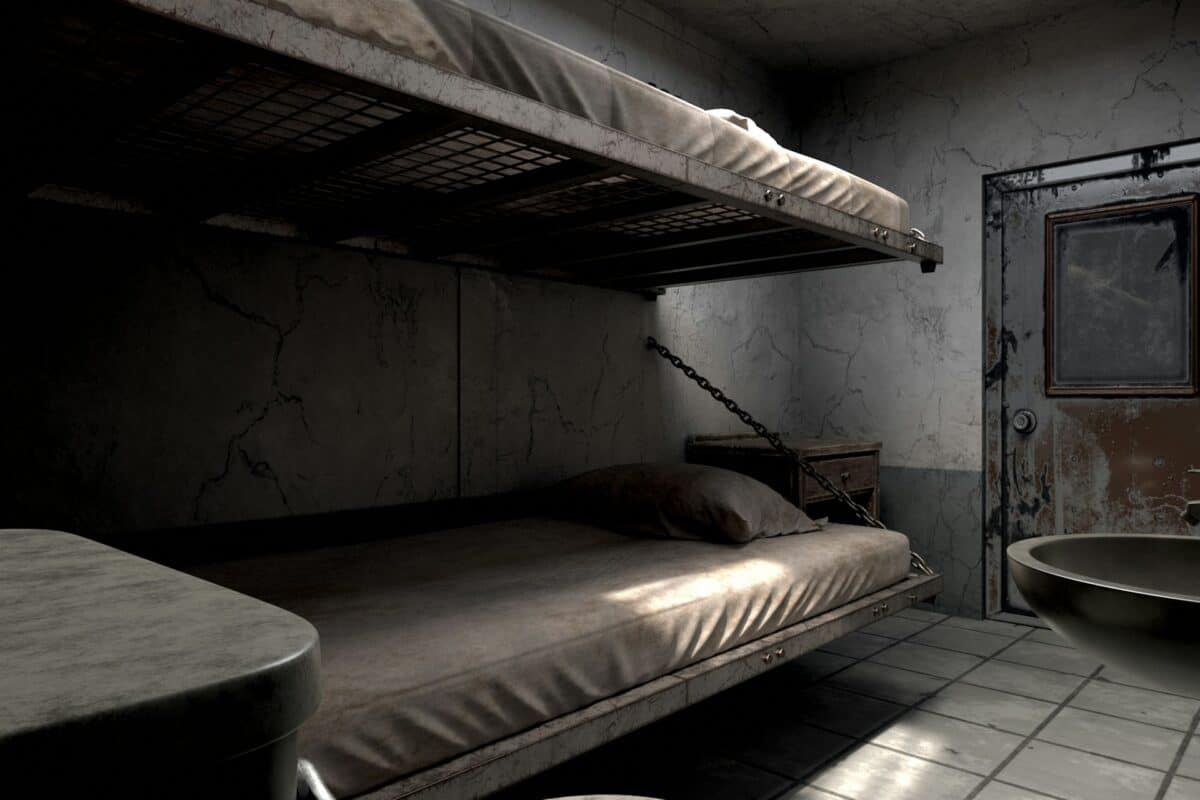
In May, the federal Bureau of Prisons published a new policy on lockdowns and modified operations – an action that both PERA and More Than Our Crimes have advocated for due to the excessive use of these practices. We convened a group of people with lived experience (as a BOP employee, prisoner or advocate/visitor) to assess the pros and cons and likely impact of the policy. This is an edited transcript. 

My name is Pam Bailey. I am a co-founder and managing director of More Than Our Crimes, which advocates for individuals at federal prison. Although I have never been in myself, I talk to hundreds of them all the time. So, clearly, I’m coming at it from the point of view of all the stories I’ve heard about people who have experienced the reality of being on the prisoner side of this equation. 

My name is Robert Barton. I’m the co-founder of More Than Our Crimes and also the executive director. And I’m coming at this from the perspective of a person who was incarcerated at the age of 16 years old, and who served over 20-odd years in a penitentiary/USP setting. I just got out last year, so this is a very recent experience for me. 

I’m Dale Chappell. I did just under 14 years in medium, to low, to administrative custody in a medical center. At this point, my full-time job is to work with attorneys and their clients on prison preparation, release prep and post-conviction matters. 

I’m Sam White*. I worked for more than 30 years with the Bureau of Prisons, from case manager to warden. 

I’m Jack Donson. I’ve worked directly with people incarcerated in federal prison for 38 years, 23 as a case manager and other capacities in the BOP. As founder of the federal Prison Education and Reform Alliance, we educate and support the justice community, people in prison and their families. 

Lockdowns vs modified operations

PAM: We’re here today to talk about a new policy that was issued by the BOP in May. This is the first time that there has been a formal, written policy governing both lockdowns and modified operations. 

I’ve been pushing for a formal policy for a while now. One of the things it does is define just what lockdowns and modified operations are.

Lockdown: A total cessation of normal institution operations to maintain or restore the safety and security of an institution, staff, and inmates. 

Modified operations: A precise, temporary security measure within a correctional institution, allowing for targeted restrictions in specific isolated areas while maintaining standard activities in unaffected areas of the institution. 

That’s important because a lot of times, it has seemed that prisons used “modified operations” as a way to avoid saying there was a lockdown. I’m aware of several prisons that have been using modified operations as an ongoing situation, not the temporary, location-focused restrictions described in the new policy. For example, for a long time, FCI McKean was locked down every day at 5:45 p.m. 

JACK: I agree. I believe modified lockdowns have been a way to circumvent reporting requirements. Sam, am I correct? When it was just “modified,” you wouldn’t have to notify the regional office?

SAM: You’re spot on. The regional directors put out guidance that says a total lockdown has to be reported. But if you do a modified or lock down only one unit, you don’t have to notify anyone.

The policy lists examples of acceptable reasons for imposing a lockdown, including power outages and serious assaults on inmates or staff. You can shut things down until you can figure stuff out, but you also must have a plan for bringing operations back up. Good institutions were already doing that. 

Modified operations are anything short of that and, in the policy, are not prison wide. 

ROB: That wasn’t the case when I was at USP Coleman 1. “Modified” meant we were allowed some type of movement but not locked down all day. It was prison-wide though. I remember that from November of 2024 all the way to probably April of 2025, we were under modified operations. What that looked like was that we didn’t come out on the weekends, and during the weekdays, depending on the day or the staff, we came out for an hour and a half for the morning or evening shift… They usually said it was due to short staff, but sometimes they claimed there were too many people in the SHU and they couldn’t send any more there. 

When I first came to the BOP, there was no such thing as a modified lockdown. When they locked down after an incident, they locked down and then let you right back up when the investigation or whatever they had to do was done. Today, for some reason, they feel like they feel like they must gradually ease you back into regular programming. 

For example, when we finished a 30-day lockdown, the top tier would come out for an hour and then the bottom tier came out. Then we’d be down the rest of the day. The next day, we’d have a little bit more time out. We’d repeat that until we were fully out.

Reasons for limiting movement

JACK: Two observations: First, PERA has been looking at this issue as an organization for quite a while, and we’ve always considered modified operations as circumventing reporting requirements. Second, the two most common reasons cited these days for locking down or instituting modified operations is staff shortages and the SHU is full. Well, notice that this new policy doesn’t address those issues. Why not? I think it’s a little disingenuous.

SAM: I’m looking at the new policy, and it gives examples: Major disturbances or riots, escapes or suspected escapes, violent incidents, critical infrastructure failures, extreme weather, contagious disease outbreaks, mass contraband searches, ongoing investigations, and broad publicity security events. An important caveat though: The sentence before those examples says, “lockdowns or modified operations may be initiated for various reasons. Some examples include but are not limited to….” 

ROB: That gives wardens leeway to do the things that Pam was asking about. Basically, the warden has the discretion to do whatever he wants to do, honestly. 

Another common reason for lockdowns has been punishment. They don’t like what someone did, so they punish everyone for the actions of a few. It’s supposed to be a teaching moment:  If you do this, this will happen. But in actuality, that didn’t change anything because we became conditioned to certain types of punishment, including lockdowns. 

PAM: Dale, did you experience or do you hear about this kind of thing in the prisons that you were in or that you’re hearing about now from people inside? 

DALE: I’m hearing similar things like you said, such as lockdowns after the 4:30 p.m. count. FCI Oakdale was doing it every weekend because of so- called “short staffing.” Guys have to go to lunch during a controlled move. They go get their food and go back to their cells. Yet they tell me they see 16 staff members lining the sidewalk. How is that short staffed? What they’re seeing is not lining up with what they’re being told. I hear that Oakdale has stopped that for now because somebody was able to get word to people on the outside and then region came in and said, “This is not supposed to be happening.” 

JACK: I’m not saying we can take credit for this as an organization, but I’m constantly reporting this stuff to BOP officials. I’ve been reporting like crazy lately. 

Impact and accountability

PAM: So now that we have this policy, what will happen “on the ground,” since so many other policies are not followed by staff? Also, in light of these gaps that appear to be written into the new policy?  

SAM: I don’t think short of staff is going to be an acceptable reason to lock down anymore. Wardens are going to be directed to fix that. It’s hard to hire more people, but what they can do is shift people around. One of the prisons I was at lost a lot of officers. And what happened was that when the remaining officers bid on their posts, none of them wanted the evening watch shift.. So what management had to do was, the next time they put posts up for bid, they pretty much took away all day-watch slots on the roster. They assigned secretaries, case managers, counselors and department heads to cover those, so the officers were forced to work evenings and mornings. Of course, that pissed them off even more, which probably is the reason they lost even more staff then. But they had to find a workaround to avoid the gaps. 

The point is this: If you’re short staffed, you have to rotate people around. Even if the union is reinstated, department heads don’t have bargaining rights. I know FCI Schuylkill did it for years. Department heads worked 4 p.m. to midnight and midnight to 8 a.m., just to relieve some of the overtime burden on the institution. But then, when you do stuff like that, you wind up losing your department heads because that’s not what they signed up for. Plus, you’re paying someone at GS-12 pay to do a GS-6 job. Still, you’re covering a shift and this way you can keep normal operations going. The wardens who aren’t creative are the ones who are failing. 

JACK: Pam, you made me think about something. You asked if staff would follow this policy since they are so noncompliant with others. On the one hand, I think this policy should reduce lockdowns because of the accountability mechanisms written into it. 

Each institution’s captain must document all lockdowns and modified operations via [a new] Monthly Lockdown and Modified Operations Tracking Log and submit it monthly to the Correctional Services Branch, Central Office.

But now I’m wondering…Since short staff and full SHUs aren’t addressed, will staff feel they can continue to do it and not have to report it as a lockdown? The problem with policies, while being good and needed, they won’t be followed if there’s no direct enforcement or repercussions for not doing so. We’ve seen that over and over. 

ROB: There’s a lot of policies that aren’t followed. I’ve had officers and wardens tell me, “We don’t have the manpower to do these programs or implement this and that… Congress is mandating all these things, but they’re not giving us the funding to do it so we can’t do it.” Until there’s some repercussions or somebody who will make them follow through with the policies, I don’t feel it will be done to the extent that they need to be done. 

PAM: That raises a question: The accountability that’s built into this policy is monthly reports, along with staff using Truscope [an electronic logbook] to track their actions. 

If a lockdown exceeds three days, a mental health professional must visit affected units at least weekly to assess inmate well-being. These rounds should be documented electronically in the TRUSCOPE program by the completing staff member. In addition, department heads or a designee must visit each locked down or modified area at least once per week and document the round electronically in the TRUSCOPE program. Department heads will conduct meaningful rounds, observing all assigned inmates in the area to address any concerns related to their department. During lockdowns and modified operations when general population inmates are secured in their cells, housing unit officers must observe each inmate once per hour, not to exceed 60 minutes in between rounds, and the rounds must be documented electronically in the TRUSCOPE program.

My question is twofold: Am I being too cynical when I wonder to what extent can we rely on staff being honest on the forms? And also, are they going to dedicate time at the central office to actually review all these forms and do something with them? 

SAM: Generally, yes, people are truthful when using Truscope. Is everybody perfect with it? No. Do people forget to log stuff in? Yeah. Is it intentional? I never saw anybody deliberately falsify something. 

JACK: Let me piggyback on that. The policy says department heads have to log in on Truscope during the lockdown and that this will be the accountability. It’s my understanding that the new camera systems allow somebody in the regional or central office to look at the footage any time. So, they literally could monitor in real time or after the fact. Correct?

SAM: That’s the intent. But remember, the institutions aren’t that old, and they don’t yet have the bandwidth as far as networking and computer access goes to do all the stuff they want to do. Especially now that you have wireless tablets coming in for the inmates. There’s a lot of stuff going on that’s destroying the bandwidth. Video takes a ton of bandwidth. 

PAM: To what extent, then, will filing monthly forms turn into real accountability?

ROB: I agree that’s an issue, but one thing I do have to say: I know from talking to guys at Coleman, which was locked down all the time when I was there, and they say it’s not happening anymore. They’re out and doing all the programming they’re supposed to do. Even when an incident happened, they weren’t locked down to the extent that they usually were. And I’m hearing this from other institutions too. So something is working. 

SAM: I agree. There was a pretty serious assault on staff at USP Canaan. But they were back up within an hour. 

Culture change

PAM: I’m still hearing about lockdowns and modified operations at some prisons, so I’ll withhold the kudos for now. But regarding where it’s better: Is this the new BOP administration’s influence? I doubt it’s the policy yet. We need to understand what’s working so that whatever it is, it doesn’t shift back when there is a change in leaders, etc. I’m going to be watching to see how consistent it is over time. What’s important is to change the culture, not just the policy. I’ve heard too often from Rob and others that you can have a good warden and then another warden comes in and it changes right back. 

Is this the new BOP administration’s influence? I doubt it’s the policy yet. We need to understand what’s working so that whatever it is, it doesn’t shift back when there is a change in leaders, etc. I’m going to be watching to see how consistent it is over time. What’s important is to change the culture, not just the policy. I’ve heard too often from Rob and others that you can have a good warden and then another warden comes in and it changes right back. 

For example, the policy very deliberately says, “Department heads will conduct meaningful rounds, observing all assigned inmates in the area to address any concerns related to their department.” The word “meaningful” is very subjective. Clearly, it’s in there to make a point but how do you enforce that? I hear a lot about “drive-by” rounds by psychologists and other staff during lockdowns – in other words, scooting past the cells without stopping. 

JACK: That’s a good point on culture. Sam is old school like me. The Bureau of Prisons was at one time a role model; it ran things right. Unless there was a serious stabbing or a gang-type incident, we didn’t lock down. When we did, the goal was to get right back up again. We didn’t want the lockdowns, because then we had to feed everyone! We had to prepare the bag lunches and deliver the meals. Over the years, though, lockdowns became a crutch and was used more and more and people became desensitized.

ROB: To Jack’s point, I think lockdowns became a crutch – a way to do less work or to modify programming and then it became the norm. No one seemed to consciously think about it as a choice. That’s why this type of advocacy work is important. Lockdowns shouldn’t be normal. It’s basically warehousing people and diverting them from rehabilitation, and that’s not helping anybody. 

Potential pitfalls

JACK: I have to say, though, that there are some insane things in this policy that make absolutely no sense. It says staff must see every inmate every hour. That means 24 counts. But what happens at 10 o’clock when the prison is locked down until 5 in the morning? They’re not going to see every inmate every hour. 

ROB: And every inmate doesn’t want to be seen. I don’t want you banging on my motherfucking door in the middle of the night!

JACK: And what about a hot meal every day? I respect that, but how are they going to pull that off? 

ROB: At Coleman they managed to do that. The cops brought it to us on carts. Of course, by the time we got it, it was only lukewarm. But it’s not really the temperature that matters. At least it’s food, compared to bologna or peanut butter and jelly, which we get a lot of on lockdowns. USP Hazelton (West Virginia) serves these pre-made, pre-packaged sandwiches that they heat up and say that’s your hot meal. But just because it’s hot doesn’t make it real food.

PAM: I hear from a lot of other prisons that they don’t get hot meals. It’s peanut butter and more peanut butter. Sam, what do you think about how doable this is?

SAM: We did it, but we didn’t do it until probably about a week or so into a longer lockdown. We were down for six weeks once after an officer was murdered and we started serving hot meals probably about a week or so into it. 

PAM: The lockdown policy also says that the Health Services Administrator at each prison “must establish and implement a procedure to ensure access to routine sick calls,” as well as mental health services and subspecialty consultations, both inside and outside. I hear that doesn’t happen now. 

ROB: That’s impossible to do, honestly. 

JACK: We used to have the PAs come to the unit and do a drive by to see who they really needed to see on sick call. They decided at the window [in the cell] whether you’re going to go to the hospital or not. But now, that isn’t happening. 

PAM: What else isn’t realistic? 

JACK: I think the Truscope logins by the unit managers is probably not going to happen. BOP policy says unit managers should attend team meetings [with inmates]. They don’t. And even three showers a week in a lockdown situation…I don’t know. That’s manpower, man. 

SAM: Yeah and consider this: There’s an overtime piece to this as well. Lockdowns are expensive. You’re spending more money on food because those lockdown meals are more expensive than just a normal hot meal. Staff are cooking all the food. Staff are then putting the food on trays and pushing all those food carts from food service over to the housing units. Those same staff go door to door to door with an officer because the officer’s got the keys. He has to crack the food slot [in the cell doors], drop off the food and the drinks, lock it back up and then later collect the trash. It’s very staff intensive. 

PAM: Why did they do it then? Why have they locked down so much? 

SAM: That’s a great question. 

ROB: Because Sam is sitting in his office and doesn’t have to come down there and do it because he’s the warden and he wants to punish the compound. Or, he’s the captain and doesn’t care if the officers have to do this work, so that’s what they’re going to do until he says it’s time for us to come up. And a lot of times, Sam isn’t there during the whole lockdown. He’s at his home and doesn’t have to worry about that until somebody calls him. 

SAM: Oh, that wasn’t me. I was pushing carts up the hill and in on weekends making rounds. Every lockdown, I made rounds and checked on what was going on. 

PAM: It’s crazy that lockdowns have been so common given what you just said. Jack, short staffing is cited so often as the reason, but you question whether that’s really the issue. 

JACK: Well, consider Coleman. Ever since they constructed it, staffing was always an issue because it’s such a behemoth of a prison complex. But it hasn’t always been locked down like it was recently. And right now, they’re hemorrhaging officers. But Rob says they’re making it work now. 

When you have good lieutenants managing the [staff] roster, everything runs smoothly. They’re proactive. With this one lieutenant, I used to say, “How come when you’re doing the roster, everything just flows?” And he would say, “Look, it’s not rocket science. You just must be organized and coordinated.” But when someone else was managing the roster, medical trips got cancelled and it was a disaster. A lot of it is management and accountability, like everything else. 

PAM: One of the other requirements in the new policy is that each prison must develop their own local institutional supplement spelling out how they’re going to implement it. I noticed there’s no deadline for doing that and that makes me sort of skeptical because policies are always so out of date for so long. 

SAM: A deadline should be imposed by the regional director. Each prison must have its own supplement because a lot depends on the size. FCI Fort Dix, for example, is a behemoth with 4,000 inmates, but Loretto only has about 1,200. Plus, there are different medical and mental health care levels. It’s a challenge to write a policy that fits everyone. 

DALE:  Honestly, I’m a bit skeptical that this policy will bring big change. It’s filled with “at the warden’s discretion” and “the warden may.” It’s all about the warden or the designee. That designee could be the captain or the lieutenant. That also means it will be tricky to challenge it with a grievance if it’s not followed, because of the vagueness. 

JACK: Not to mention there’s no bold blue CFR language. Program statements ordinarily include code of federal regulation language that’s blue, and the agency has historically tried to abide by that. So, the policy the way it is now is not law and it’s not regulation. 

ROB: It’s written vague for a reason. 

DALE: Exactly. Policies are almost always vague because there must be some room for decision making and that sort of thing. But if a federal employee has discretion, then it’s viewed under a different standard if it comes to litigation. 

Bottom line: I don’t trust the BOP one bit. When new policies come out, I always read them with a lot of doubt because I’ve never seen the BOP follow its policies. There’s one thing I do like, though – that even modified operations must be reported. That could help limit things like lockdowns after four o’clock count or on weekends. I also hope that means it will give people more access to programming. 

ROB: As I said, I’m hearing that lockdowns are decreasing. That gives me optimism. I also like the fact that they now must report it, including modified. A lot of times we would be locked down, and the region wouldn’t know anything about it. So, wardens could leave us locked down for however long they wanted to. But now there’s a lot of extra work they have to do if they lock down. 

At the same time, I’ve lived on the other side of this for decades and I know that a lot of times, staff just don’t follow policies. They don’t think there will be consequences if they don’t. A resident of these institutions must jump through so many hoops to try to get some type of relief that the average person is not going to try, and staff understand that. 

PAM: I want to add, from the point of view of somebody who’s been a visitor, that this policy is sorely needed. One of the last times I tried to visit Rob when he was still in, I got all the way down there and spent $800 on airfare and hotel and rental car, only to find out the morning of the visit that they were locked down. I like that this policy says, “Institutions must maintain normal visitation schedules to the greatest extent possible. Total visitation restriction must only be implemented as a last resort.”

But I also want to make this point: I think these monthly reports, or an analysis of them, should be made public. After all, we don’t have the ombudsman’s office that was supposed to be funded under the Federal Prison Oversight Act. 

JACK: I think it’s interesting that the new form that must be completed monthly is not on the BOP’s public website, despite the talk of transparency and accountability. Why don’t they want us to see the form? We’ve already submitted a FOIA request for that.

My opinion on the overall impact of this new policy: It’s going to make things better because staff will be more conscious of why they are imposing a lockdown. And inmates have something to litigate with if necessary. 

PAM: Sam, do you think the union will object to this policy if it is reinstated by the court? 

SAM: Most definitely, yes. Any internal policy must go through the union for negotiation, and what this one does is create a ton of work for every housing unit officer. For example, they have to put their eyes on every inmate every hour during a lockdown. They must serve a hot meal every day, etc. I noticed that there are some typos in the policy, and I may be wrong, but it appears to me that the BOP pushed this policy through fast in case the union is reinstated. They’re trying to get stuff done before the union comes back on board. 

PAM: One last thought: Culture is hard to change. It’s known in the corporate world that what you’re incentivized to do is what you do. I’m thinking wardens should be evaluated in part on keeping lockdowns low. 

SAM: Things don’t get broken overnight. And a new policy that just came out a week or two ago isn’t going to change anything overnight. It’s going to require about a decade for staff to learn a different way of doing it. But it’s up to the executive staff, the wardens and the associate wardens to enforce the policy and do it the right way. And over time, culture will change.

*This name is a pseudonym, since he wants to preserve his BOP relationships.

‘My Property is Missing!’: What to Do When Belongings Are Lost or Stolen

Two incidents were reported to us recently, illustrating how personal property can go “missing” when incarcerated individuals are sent to the SHU or transferred to another facility: 

WH: I was sent to the SHU for five days for what turned out to be a baseless investigation. While I was in the SHU, my entire locker was emptied. The inventory sheet was marked “locker found unsecure.” But I never left my locker unsecured. 

My locker caddy was folded up and thrown in the trash, and everything that had been inside was gone. I estimate the value to be just over $254 in personal property, plus eight books a friend sent me.  I’m talking hygiene products; writing materials; bags of coffee and unopened seasoning bottles; unopened shirts from the commissary that I was saving for when I leave prison; stamp books – I could go on.

—-

MB: One night, two lieutenants strip searched and shook me and my cellie down. Several days later, it happened again, with one lieutenant and three COs. It was so bad, they moved us to another cell in a different unit. 

Later in the month, there was a unit-wide cell search for five hours. It was the start of a unit lockdown for a month. We received no showers or anything. While we were still on lockdown, we were all moved to the gym for another mass shakedown, and they found a phone in my old cell. So, they sent me and my cellie to the SHU. Before we left, we packed all of our property in two commissary bags each and left them in the cell. A CO brought the bags upstairs to the cage that is supposed to be locked at all times. I asked six to seven staff to bring my property to my cell so it could be inventoried. But they just kept spinning me.

While I was in the SHU, men coming in told me that the cage had been left open, allowing inmates to steal all of my property. They told me, “Hey I just want to let you know that people are stealing all your stuff. Two guys are selling your wife’s pics as jack pics and some of your homeboys found your kids’ pictures in the trash.” Half of my photo albums are of family and friends who have passed away since I came to the feds in 2019. Also in my property were my wedding ring, court transcripts and eye contacts, without which I am legally blind. I was told it would take up to three months before I could be seen for a new prescription. 

I was in the SHU for four weeks. Staff never did anything, however. I even gave them the dates and times so they could check the surveillance cameras. 

Unfortunately, protection of personal property is difficult to proactively manage. These two case studies illustrate what can happen when staff don’t follow BOP policy and procedures. And when that occurs, there is not much that can be done. In WH’s case, it is difficult to prove that the individual’s locker was indeed locked (thus protecting his property from other inmates until an officer inventoried and stored his belongings). 

As for MB’s case, there isn’t a dedicated camera for the property room. Although a camera in the area might have picked up what transpired, video is generally not kept for more than three weeks. (And short of a court order, it is difficult to obtain; no one wants to release evidence of staff malfeasance.) LIkewise, filing grievances often merely causes hostility – as MB later discovered. 

The only recourse these two individuals have is to file a tort claim for the missing items. That is why it is so important for inmates to save their commissary receipts. If they can’t prove the value of their possessions, they can’t file a tort claim. (Past receipts are available from the commissary only for the current fiscal year.) And yes, that means there is no compensation possible for sentimental items like MB’s wedding ring. Note:

  • Tort claims must be filed within a year of the incident.
  • No more than $1,000 can be sought. 

What prisoners can do to protect themselves

There’s not much that could be done in advance by MB and WH to prevent what happened. But that’s not true for everyone. Here are some tips:

  • Fundamental to property protection is to never leave a locker unsecure. Too often, prisoners leave their lockers unlocked, which can lead to property theft as well as the planting of contraband by a staff member or another inmate. 
  • It’s also advisable for prisoners to have an understanding with their cell mate about what to do if they unexpectedly go to the SHU or are shipped out. For instance, if an inmate doesn’t return to their cell for a count, their cellmate should secure their locker immediately as a protection against theft.  
  • Always retain commissary receipts, especially for more expensive items. 

What BOP policy says

While BOP policy calls for officers conducting a shakedown to leave cells like they found them, that does not always happen. And when inmates are sent to the SHU, officers are supposed to secure their lockers and/or cell doors as soon as they are notified of the move. The shift officer is required to conduct an inventory. Then, the compound officer takes it to the property room in the SHU. Again, that doesn’t always happen. Property rooms are equipped with lockers that should be secured, and BOP policy states that staff “shall” provide inmates with a copy of the inventory form “as soon as practicable.” The inmates should then sign the form, signifying receipt of the inventory and its accuracy. A copy of the inventory must also be placed in the inmates’ central file.

Note that opened, perishable items are typically not packed up. The same goes for any items that exceed the allowable number. For example, prisoners are only allowed to have up to five books in their cells at any one time. (There is also a limit on what a person can have in the SHU, depending on whether a person is there for administrative detention [investigation, personal protection, etc.] or if they are in disciplinary segregation as a sanction.) 

A few related suggestions for handling problems:

  • The BOP’s special housing unit policy restricts what personal property can be brought into the SHU. 
  • All property-related concerns should be addressed to the SHU property officer. If that individual is not helpful, go to (in this order) the segregation review official (SRO, which is usually the SHU lieutenant), the SHU captain, the assistant warden for programs and the warden. Executive staff members are required to make SHU rounds weekly. If possible, property issues should be brought to the attention of the captain in front of the assistant warden for programs and/or warden during these rounds.
  • However, avoid being adversarial with SHU officers, or they may leave your property unsecured and thus vulnerable to theft by the SHU orderlies (as happened to MB).
  • File a grievance/administrative remedy only as a last resort, since this further creates hostility.

Treatment of property during transfers

The other time personal property often becomes an issue is when prisoners are transferred from once facility to another. BOP policy states:

“Personal property shall be shipped by staff to the receiving institution, with the exception of legal materials for active court cases and some other items deemed “necessary or appropriate” by by staff. These may be transported with the prisoners. 

Staff of the sending institution ship authorized personal property via bus, van or airlift directly to the receiving prison. Ordinarily, no more than two boxes of property (with the exception of legal materials) will be shipped at government expense for each inmate. However, prisoners may elect to pay for the shipment of additional boxes. 

R&D staff at the sending prison are responsible for recording all personal property that will be shipped to the receiving institution on an inventory form. The inmates should certify that the form is accurate and be given a copy to take with them. Without that form, it is difficult to prove that property was shipped if it later goes missing, or to file a tort claim.

Generally speaking, it should take no longer than a week or two for prisoners’ personal property to reach the final destination. If a month has elapsed and it has not been delivered, the inmate should approach a correctional systems staff member and ask that its status be investigated. Is it in the property room at the new prison, and just has not been given to the inmate? If not, the inmate should ask that the staff member call the transferring prison to inquire about the property’s status, and track it if necessary. If the correctional systems staff is unwilling to assist, a family member may contact a BOP regional support coordinator and ask for assistance. 

Remember:  Creating conflict with the correctional systems staff sometimes results in property being sent to the wrong institution, disappearing altogether or being “lost” in the sending facility’s property room.  If inmates are adversarial with staff, there is nothing but downsides! Inmates should try to maintain their composure no matter how far staff deviate from the policy and process. Never stoop to the level of staff. 

The BOP Strangles Advocacy Communication

The federal Bureau of Prisons seems set on making it difficult for its captives to forge connections with anyone beyond the inner circle they entered with – including people from advocacy organizations. 

Why else, for example, would you be asked on the form you must complete to become an approved visitor whether you knew the person prior to their incarceration? I’ve heard from a number of people both in prison and out that if you are honest and say “no,” your visit will be denied, 9 times out of 10. 

This is true at state prisons as well, and I asked a warden who I met at a conference why being a new acquaintance is an immediate reason for denial. He admitted that he didn’t know why. “It’s just been a rule for as long as I can remember.” (And no one questions it!) One friend was engaged to marry a woman he had come to know through letters, and she was never allowed to visit. At least most state prisons offer video visits. The BOP has so far offered that benefit only in women’s prisons.

BOP bans all but one-to-one emails

Now, the BOP has taken aim specifically at advocacy organizations, although that is not its stated intention. First, the agency limited emails to 10 people at a time. Then, this month, the limit was scaled back even further to one. Imagine organizations like More Than Our Crimes, which has a prisoner list in the thousands, sending emails out via CorrLinks (the prison email service) one by one. It’s simply too time-consuming. 

The BOP’s stated reason

In 2020, the DOJ’s Office of the Inspector General issued a report that analyzed the BOP’s efforts to “prevent radicalization” by monitoring inmates’ communication.  During the years examined in the report, there were 512 individuals in the BOP who were identified as having a “nexus to international or domestic terrorism” (fewer than 1% of the high of 219,000 inmates). All of their emails are supposed to be screened. But because the BOP is concerned that others may be radicalized after their incarceration, the agency also randomly monitors a sample of emails (and phone calls, letters, etc.) to and from all inmates. (The target is at least 5%.)

However, during the OIG’s investigation, “several” BOP staff members reported that it is not possible to meet that standard, thus necessitating measures to reduce the volume of emails. Although the BOP uses software to search emails by key words, the OIG concluded that the process was insufficient.

Here is the key section of the OIG report: “We found that the BOP does not have sufficient control over inbound emails…Several personnel said they have detected radical emails being sent to multiple inmates. BOP staff also expressed concern to us about the possibility of a mass email being sent to all inmates in a particular group such as Al Qaeda, Aryan Circle, Al-Shabaab or ISIS, directing them to take coordinated action on a certain day.”

BOP staff told the OIG team that the agency had not banned mass emails previously “due to legal concerns” – indicating that the agency understood that its recent action likely is a violation of rights related to the First Amendment and free speech. 

Is this fair or even effective policy?

What I wonder is just how many group emails have contained radicalizing messages, compared to those sent to individuals? No data or comparisons were offered. There also is no discussion of the downsides of a blanket ban on group emails:

  • Staff at FAMM, the largest of the prison-reform organizations, report that they have responded to the ban by resorting to the postal service instead, consuming many hours of labor. So, rather than eliminate such communications, the mail to BOP prisons that must be screened and copied (to eliminate concerns about drugs being sprayed on the paper) has now increased
  • An individual who uses a prison e-newsletter to solicit legal business is contracting with a company that has developed a hack that takes over a user’s CorrLinks account and automates the dissemination of emails, one by one. In return, he includes an ad for the company’s text-messaging app at the top of every newsletter. I have no doubt that other people like this lawyer are using the same service. The problem is, use of text messaging by inmates violates BOP rules. So how does this workaround serve the overall good?
  • Lisa Legal, another provider of prison newsletters, says it has stopped its service altogether. Instead, readers are asked to copy the content and send it in on their own. The newsletters contain highly useful summaries of recent court and other rulings. The withholding of this information certainly doesn’t serve inmates and their families. 
  • And then you have small nonprofits like More Than Our Crimes; we can’t stop our newsletters because they are core to our mission. But we don’t have the access to labor that FAMM has and we also don’t want to violate BOP rules. We will likely have to pay to use an outside service to address, stuff and mail our envelopes – using financial resources that we should be using on other services.

The OIG team recommended in the 2020 report that “the BOP establish controls that mitigate the risk of inmates communicating with unknown and un-vetted parties.” Then why doesn’t the BOP implement a process to vet organizations and parties that need to send mass emails? Wouldn’t this accomplish the same desired end? Emery Nelson from the BOP’s Office of Public Affairs told me in an email that the new policy still “encourages and allows appropriate contact between inmates and pro-social organizations.” How? In reality, the policy is like using a sledgehammer for a nail – splintering the wood and weakening the foundation at the same time.

This same principle is obvious in a lot of other BOP actions — try to reduce risk to zero (an impossible goal), while sacrificing benefits without due consideration. For example, the Hazelton prison complex in West Virginia doesn’t allow any food from vending machines during visits. That may reduce the risk of visitor-introduction of  contraband to some small degree, but it also makes visits by children for any length of time uncomfortable and tedious. It’s already hard for many family members to travel the necessary distance to visit; this restriction makes visits even more difficult. There is ample evidence that maintaining family contact is critical to rehabilitation. But it seems that the BOP only thinks about security, rather than factoring in long-term benefits as well (as they do in many European countries).  

Update: I communicated with BOP Deputy Director Joshua Smith about this issue and he said a solution is in progress. Stay tuned.

Death by a Thousand Cuts

“Death by a thousand cuts” seems to be the federal Bureau of Prisons’ SOP these days. From the creeping frequency of “modified” (partial) lockdowns, to ineffective policy implementation that is causing many prisoners to pay for phone calls that should be free, to reduced visiting hours, the BOP seems intent on fraying already fragile family bonds. 

Here’s a snapshot of how this behavior is manifesting itself across the network of 122 federal prisons. (To explore what other issues are being reported at the various prisons, visit the Prison Pulse Report.)

Phone calls to family

The BOP announced last fall that beginning this year, its incarcerated residents would no longer be able to make 510 minutes of free phone calls each month. Instead, only individuals who have an identified programming need and are at least on a waiting list for a matching program can make calls for free – and only up to 300 minutes per month. At least, that’s what the policy says. Five months after the change, we are still hearing that many eligible people are having to pay for their minutes—a charge many cannot afford. Combined, the reduced minutes and the cost are making it difficult for many incarcerated individuals to maintain consistent family ties. 

PERA partnered with More Than Our Crimes to provide a list of individuals and who were being forced to pay for minutes that should be free to the BOP’s regional “family support coordinators.” The response we received suggested, in part, that the individuals contact the executive assistants for the facilities involved, as well as file administrative remedies. “The Administrative Remedy Program provides an inmate with a detailed response in writing after review is completed, along with any further documentation for their inquiries.” What that response doesn’t say is that relief is rarely granted via the remedy process, and retaliation for filing them is common. What is also not acknowledged in the response is our report that every channel possible had already been tried by the individuals we cited. Said one person at FCI Sheridan in Oregon:

“Five people had the free phone time taken from them. Then we finally got it, but we’re not sure how. We talked to everyone up the ladder: the Unit Manager, Case Manager, Counselor, Psychology Staff and the CMC. But now what’s happening is that if you complete all of your FSA programming needs then your phone time is taken from you.”

Another individual at Forrest City Low in Arkansas wrote, 

I should get them [the free minutes] and do not. My case manager said it’s the trust fund, the trust fund said it’s the region and it goes on without an answer.”

Perhaps this is why some people call the BOP “Backwards on Purpose.”

Lockdowns

If you’re locked down while incarcerated, that means you’re confined to your cell. It can last for a couple of hours, several days or even weeks. In the latter case, you’re only allowed out for a shower a couple of times a week. That means no phone calls, no visits. Reports received recently from members of the More Than Our Crimes network indicate that lockdowns of all forms are increasing, and increasingly rather kneejerk. Consider these examples:

We just came off a two-week lockdown, supposedly to save on overtime costs. Now we are being told we will be locked down one week each month (FCI Waseca, Minnesota)

They are locking us in every Tuesdays, Wednesdays and Thursday at 6 p.m. for the rest of the evening, supposedly because they are short of staff. (FCI Thomson, Illinois)

We are just now coming out this week after a month behind the door. Some guy checked in and told the captain that a weapon was in one of the units. So, they tore the whole compound up, with no success. They didn’t find anything. (FCI McDowell, West Virginia)

The prison has been on lockdown since February 19 [written March 31]. Every time I call the facility, there is no answer at all, or when I make a selection from the automated menu, there is a silent pause and then it hangs up. All visitation has been cancelled, and we have no contact with our loved one! (FCI Allenwood, Pennsylvania)

William Marshall, the new BOP director, said on Fox News that he wants to add programming to the tablets incarcerated people can buy, so that education won’t be interrupted during lockdowns. While that is a great idea, we also want to see lockdowns become rare, not routine like they are now.

Visits

At the same time that calls are more expensive and people are locked in more, we are hearing stories about greater barriers to in-person visits. Consider:

  • At both USP Coleman 1 in Florida and FCI Sheridan in Oregon, visitors have recently been turned away after traveling long distances when an ion scanner erroneously detected the presence of heroin. Ion scanners are so sensitive they can detect minuscule amounts of substances – which can be good but also leads to false positives. In addition, even accidental or incidental contact with drugs (such as touching currency containing trace drug residue) can trigger a false positive. 
  • FCI Sheridan has further discouraged visits by allowing them on only one weekend a month, and never on holidays.
  • At FCI Allenwood in Pennsylvania, families recently reported that physical contact is no longer allowed during visits. Family members are separated from loved ones by a plastic barrier. They must talk through holes drilled in the plastic! Supposedly this COVID-like practice is due to short staffing and it will stay in place until at least November.
  • At the Hazelton complex in West Virginia, the visiting area contains no vending machines – making it very difficult for young children to stay for more than a couple of hours. And at USP Lee in Virginia, if the incarcerated person must use the toilet, the visit is terminated.

Mail

We receive many reports of letters not received at all, or that arrive weeks after they were sent. Family members tell us they have resorted to numbering their letters so that they have some way to tell what has gone missing. Mail tampering is illegal, but is very hard to prove.

Connections to the outside world, especially with family members, is extremely important to prisoners’ mental health and social skills. They should be prioritized and protected, not sacrificed due to inconvenience or the little extra work they require to maintain.  

The dialogue that didn’t happen at the House Appropriations BOP hearing

Among the primary channels for independent oversight of the federal Bureau of Prisons are the House and Senate Judiciary and Appropriations committees. And yet the hearings held by these bodies are too often “dog-and-pony shows”—featuring questions that often miss the issues that most need examination, followed by BOP responses that omit or obscure the full truth. What’s needed is for committee staffers to consult in advance with an organization like PERA, which can identify issues that need exposure, as well as how to word the questions, then provide real-time analysis of BOP responses and suggested follow-up questions.

A case in point is the recent BOP oversight hearing held by the House Appropriations Subcommittee on Commerce, Justice, Science and Related Agencies. Here are our thoughts on questions that missed the mark or weren’t asked, along with responses that hid more than they revealed:

Plans for a new prison

Republican Chair Hal Rogers from Kentucky predictably promoted the planned construction of a new federal prison in his state’s Letcher County. Given that so much of the rest of the hearing focused on the BOP’s struggle to recruit and retain staff (Deputy Director Kathleen Toomey cited more than 4,000 vacant positions across all its facilities) and maintain its buildings (there’s a $3 billion modernization and repair backlog!), it’s hard to understand how he can justify another prison. (Toomey: “Currently, more than 4,000 beds are unusable due to dangerous conditions like leaking or failing roofs, mold, asbestos or lead. That’s the equivalent of two to three entire prisons.”)

To justify a new prison, Rogers cited “a rise in inmate numbers” that “demands a careful assessment of whether the BOP has the infrastructure…to manage this growth while maintaining safety and rehabilitation.” What he does not know or did not divulge is that the agency is incarcerating 64,000 fewer people today than in 2013 (155,000 vs. 219,000). 

Likewise, the Letcher County location is like most other federal institutions – in the middle of nowhere and thus don’t facilitate family visitation and do not attract qualified workers. 

The BOP’s staffing shortage

In her opening comments, Toomey elaborated on the large number of vacancies the BOP has yet to fill, saying that salary incentives have been most effective – totaling $229 million in fiscal year 2024. However, due to current push to cut costs, she acknowledged that this tactic is not sustainable. What is needed, yet no one asked about, is a deeper analysis of non-pay dynamics that affect job satisfaction. Likewise, an expanded, creative use of university interns would be an option; and once in the door, many stay.

When it comes to cost cutting, the BOP should be pushed for details and challenged on its choices. For example, Toomey reported that the BOP has reduced its operating budgets across the board by 20% and paused employee training. But instead of the DOGE-style “chainsaw” approach, the BOP should first look at its top-heavy bureaucracy

While there is indeed a critical shortage of correctional officers and medical professionals, overall, the BOP is actually up in staff since 2005: The bureau employed 32,735 staff in 2005. In contrast, as of May 30, 2024, the BOP reported 35,827 employees and 3,827 vacant positions. That’s 3,000+ more staff than in 2005. What should be cut, as we said in a recent blog post, is headquarters staff (with 10 divisions) and the six regional offices. 

Another possible cost-saving solution is a shift away from designating most BOP staff members as law enforcement personnel. This would have two beneficial effects: It would save money by altering the benefit structure, including pensions and retirement age, as well as curb the practice of “augmentation,” in which even these professionals are expected to be correctional officers when there is a shortage. Requiring someone who wants to be and is trained as a teacher, social worker or case manager to search cells, etc. is antithetical to a mission of rehabilitation.

What should not be cut are items like the injections that had been used as the primary therapeutic intervention in the BOP’s medication-assisted treatment program for drug addiction. The injections of naltrexone or buprenorphine had long been preferred over oral treatments in the prison setting due to the greatly reduced risk of diversion. However, a switch to oral strips was recently mandated to cut costs. Toomey obliquely referred to this cut in her testimony, yet none of the congressmembers present questioned it.

And then there are some short-term additional expenses that would both alleviate shortages and improve some longstanding deficiencies in the care of adults in custody. For example, it would be worth the minimal extra cost to equip inmates’ currently “dumb” tablets with the functionality needed for video visits and interactive educational programs. Since the shortage of COs have led to an unacceptable frequency of lockdowns, allowing video visits with family, email from inside cells and online educational programming would mitigate some of the negative consequences. In addition, fewer educational staff would be needed. Instead, as of today, the tablets offer only pay-per-view mindless entertainment.

Another example is the scheduling of medical exams and procedures that must be performed by outside specialists. One of the most common complaints we hear from both AICs and family members is tests and procedures that take months to happen. Toomey noted that a portion of the significant overtime paid to COs is caused by the need for officers (often three at a time) to take inmates to the outside hospitals, etc. When those personnel are not available, the trips simply do not take place – leading to cases like one individual we know of who didn’t get a prostate biopsy for nine months after his PSA levels signaled trouble. But there is another solution that could save money in the long run:  more mobile units that offer more services, bringing outside medical care directly to the prison. (During its inspection of FMC Devens – a hospital facility! – earlier this year, the OIG found that exams were on average 53 days overdue, due in part to a lack of COs to escort inmates to scheduled appointments.)

First Step Act implementation

When questioned about the BOP’s notoriously troubled First Step Act (FSA) implementation, Toomey touted the “good news” that “last year, we created some dedicated positions, and we were able to almost double that number from about 350 to about 700.” 

The committee members allowed her statement to stand, so we must assume that they aren’t hearing from many inmates like we do, describing the long waiting lists and “ghost” programs (existing only on paper). For example, this was a prominent issue at FCI Dublin, closed after it became known as the “rape club.” It’s a chronic problem within the BOP; when the Second Chance Act was passed in 2007, the required reentry affairs positions were filled by simply renaming existing jobs. 

Assertions that can’t be challenged

And then there are statements like Rep. John Carter’s (“There’s been a notable rise in violent instances within federal facilities, particularly against correctional officers”) that Toomey let stand and cannot be challenged because the BOP still has not republished hundreds of policies and forms, saying “this content is temporarily unavailable as we implement the executive order on ‘Defending Women from Gender Ideology Extremism and Restoring Biological Truth to the Federal Government.’” Other pages have “dead links,” like this one that offers data on assaults in prison, both by AICs and staff. 

As the old saying goes, “democracy dies in the darkness.”


DOGE: Target the BOP, but First Talk to People Who Have Been in the Trenches

Union sources tell us that the Bureau of Prisons (BOP) is closing two of its six regional headquarters as part of cost-cutting moves – the two offices most recently opened (Mid-Atlantic and Western). That’s a smart place to cut. But the bureau shouldn’t stop there. 

In addition to the regional offices, there are 10 divisions in its Washington, DC, headquarters – each with probably more than 100 employees. Prison staff will tell you that these administrative layers (especially at the regional level) have become bloated at the expense of correctional and other specialized personnel at individual facilities. General Mark Inch, BOP director before Colette Peters (who was also the first director hired from outside the bureau), understood this and had planned to close at least two regional offices before his abrupt resignation. Rather than closing camps, as the BOP recently announced, the DOGE team should look at the burgeoning “overhead” staff.

 The stated goal of the new Department of Government Efficiency is a “more transparent, accountable and efficient governance system.” The federal Bureau of Prisons (BOP) is desperately in need of that kind of focus, as evidenced by the more than two years of near-constant negative disclosures – from the “rape club” culture at one of its women’s prisons, to the suicide of supposedly heavily guarded prisoners, to the forced closure of one unit due to rampant violence.

The BOP accounts for the largest chunk of the Department of Justice budget: The bureau’s FY 2025 budget request is for nearly $9 billion, mostly for the salaries of 37,706 employees – nearly 2,000 more than it had in the mid 2000s, with roughly the same number of people in custody. Yet, at the same time, a shortage of staff is the most common justification by the BOP for almost all its ills.

The real problem is how the BOP budget is spent and where the positions are allocated. Among the best sources for exposing fraud, incompetence and inefficiency in our federal prisons are rank-and-file case managers, clinicians and other “in-the-trenches” workers who take both the security and rehabilitation missions of the prisons seriously. And, surprisingly to some, prisoners themselves often know from where the corruption stems, as well as which vital functions are actually underfunded.

Reform-minded former BOP employees have come together to form the federal Prison Education and Reform Alliance (PERA). It collaborates closely with More Than Our Crimes, a network of thousands of individuals incarcerated in the federal system, who have an untapped view on what works and what doesn’t.

The same lack of balance can be seen in executive bonuses at the bureau. An analysis obtained a few years ago by USA Today via FOIA showed that upper management at BOP were paid nearly $2 million in bonuses over a two-year period. And those excesses are continuing. FOIA documents recently shared in a private Facebook group document large bonuses for wardens who manage some of the most dysfunctional prisons in the country. 

Another area of operations ripe for DOGE analysis is employment of adults in custody (AICs). At one time, some of the more meaningful jobs that are now being performed by staff were done by incarcerated individuals, which allowed them to both develop work skills for re-entry and earn income (although wages for prisoner labor are inequitably low, given the fact that they must pay for so many essentials themselves). The transfer of additional jobs to AICs, along with fair pay, would allow more staff members to focus on program delivery (such as education) and direct correctional duties.

A similar improvement with multiple additional benefits would be to capitalize on an under-tapped element of the First Step Act (which President Trump signed into law) and expand UNICOR (the federal prison industry) to include the sale of contemporary products and services to non-federal markets. The result would be profits that could be funnelled into programs like medical care or infrastructure improvements (so many federal prisons have leaky roofs and mold infestations), while giving more prisoners an income, a productive use for their idle time, and work skills required for re-entry. DOGE could provide a real benefit by insisting that current gold standards for business be applied to prison industries as well.

The elephant in the room in DOGE’s endeavour will be medical care. This is an area in which resources should actually be added. Delays in diagnostic testing and medical treatment are among the most common civil rights abuses in federal prisons. Capacity can be cost-effectively increased if the BOP heeds the recommendations of the National Academy of Public Administration. For instance, permanent modular clinics stationed within secure facility perimeters would reduce the manpower needed to take incarcerated people out of the prison for medical care.

The message to DOGE: The BOP needs more transparency, efficiency and accountability.  Bring it on! But this task would be best served by listening to people who have lived or worked in the depths of the “swamp,” and who want to see the bureau become a better version of itself.

Change in Phone Policy Creates Chaos

Last-minute and confusing communication by the federal Bureau of Prisons (BOP) and its facility-level staff members is stoking rumors and fueling anxiety among incarcerated individuals and their family members. 

In October, the BOP issued a public announcement indicating that adults in custody (AICs) would no longer be able to make up to 510 minutes of free phone calls each month, beginning in 2025. Instead, it said, only AICs who are at least on a waiting list for one of its “evidence-based recidivism-reduction” (EBRR) programs would be able to make calls for free – and only up to 300 minutes per month (and no more than 30 minutes per day). This, even though the First Step Act of 2018 authorizes the BOP to award up to 510 additional phone minutes to individuals participating in programming, over and above the 300 minutes everyone received prior to the COVID pandemic (during which all AICs were allocated 510 free minutes, since personal visits weren’t possible). 

In the three days leading up to the new year, the BOP finally got around to informing AICs in every prison of this new policy, and chaos has ensued. We began to receive a torrent of confused emails from AICs, and Facebook groups of family members are abuzz. 

“The BOP has decided to make its own rules once again,” wrote one prisoner. “And it’s contrary to the First Step Act, the law of the land. Three hundred minutes is what everyone got before the FSA.  One of the incentives for recommended programming that was supposed to be offered is more minutes – an additional 510. If the BOP is concerned about budget, wouldn’t it want to do that, then charge for it? This is ripe for litigation.” 

Phone calls are the backbone of AICs’ connection to family and friends; visits are expensive and mail is often unpredictable and slow. Three hundred minutes is only 20 15-minute calls a month – less than one per day.  “I have 10 children I communicate with and a multitude of family and friends I communicate with!” says one AIC. The co-founder of More Than Our Crimes must make many calls to help run the nonprofit organization. In addition, he is housed at USP Coleman 1, a facility that was locked down about three-quarters of 2024. The 30-minute daily limit on calls is particularly punitive.

“This ‘incentive’ feels like a straight-up punishment,” says Christopher Cobb, from FCI Atlanta.

In addition, individuals inside the prisons say they are receiving a variety of conflicting information, much of it wrong, according to what we’ve been told by the BOP itself:

USP Atwater (CA): “The warden made an announcement saying that although we can only get 300 minutes free now (if are in a program or on a wait list and are on the ‘refuse’ list for paying fines and restitution), we can pay for another 210 minutes.” This is incorrect. The BOP says the limit is 300 minutes, and it is “exploring” an expansion to allow another 210 minutes, at the AIC’s expense. 

USP Victorville (CA):  “Two memos have been posted on our electronic bulletin: one from the captain and one from the Trulincs [email) supervisor. But they differ: One says 300 free minutes for those signed up for FSA classes, and the other says everybody will get 300 free minutes, and FSA enrollees will get an additional 210.”  The second memo is incorrect. 

FCI Sheridan (OR): “Here they are saying that if you aren’t FSA-eligible, you do not receive any free calls.” The trick here is what is meant by “FSA-eligible.” AICs do not need to be eligible for FSA time-off credits to receive the free minutes. They merely need to be on the wait list for an approved program (a status that is reviewed monthly).

FCI Hazelton (WV): “What if you already have done a multitude of FSA programs and can’t do any now? There aren’t any waiting list for eligible programs here.”  It is relatively easy to get on a waiting list at most prisons, but we can imagine that isn’t true everywhere, and the BOP bulletins do not address that situation. For example, to be accepted into an EBRR program, an AIC typically must be marked as in need of at least one of the 13 skills (such as anger management and parenting) in the SPARC -13 assessment. It’s possible a person could be assessed as not in need.

FCI Fairton (NJ): “Once you complete your 30 minutes of free phone time here, you can’t talk anymore even if you are willing to pay.” This is not how it’s supposed to be operating, from our understanding. The 30-minute limit per day is for free calls.

FCI Loretto (PA): “They posted a chart here showing that if you have to call internationally, the cost varies by country.” Our reading of the July FCC ruling is that international calls also are subject to the 6-cent-per-minute cap. However, we are seeking to confirm that. 

Another important observation: If a call is not free, family members may pay instead via an account with ICSolutions. However, when we contacted them, the operator had no knowledge of the FCC ruling (which states the agency intended to reduce costs for AICs as well as their family members) and listed per-minute costs much higher than 6 cents for even domestic calls. On the other hand, there is an advantage to paying for calls through the outside service. A proposed rule from the BOP would authorize the agency to deduct dollars from AICs’ accounts every month if they owe court-ordered restitution or other fees.

A final note: The free calls do not start until an AIC uses up his or her minutes from the previous cycle. Once an AIC “revalidates,” the free calls kick in. This was not communicated to AICs in advance – another source of confusion!

In previous times, says PERA executive director and former BOP case manager Jack Donson, staff were given talking points in advance when major changes like this were implemented across the BOP, and a townhall meeting was held to make sure everyone was on the same page. Clearly that didn’t happen now. If there was ever a textbook case of another poorly managed aspect of the FSA, this is it. Stay tuned, there will clearly be more updates.


Collective Punishment on Steroids

Recently, it has become clear that sanctions normally designed to penalize the negative behavior of an individual are being imposed on an entire unit, or even facility. For example, an individual assaults an officer, or a fight breaks out between a couple of AICs, and the entire unit of 120 men is locked down for weeks. Or contraband comes in through the mail and the entire prison is shut down. A few cases in point:

  • On Aug. 9, the mailroom supervisor at USP Atwater (CA), died after opening a letter containing pages that appeared to be “soaked” with a substance. Although one individual inside and two in the community were pretty quickly indicted in connection with the alleged drug smuggling, the entire prison of 1,078 men were immediately locked down 24/7 until they began being gradually let out on Sept. 30. 
  • On Aug. 14, FCI McKean (PA) reported contraband coming in through the mail and locked down all 930 AICs. Around Aug. 20, an AIC-on-staff assault occurred, and the lockdown was extended. In a memo sent outside by an AIC on Sept. 19, the warden said, “…the timeline for transition back to normal operations will be dictated by inmate behavior.” It was not until Oct. 7 that the lockdown was gradually lifted.
  • Since Atwater, concerns about drugs coming in via AIC smuggling have spiked, along with seemingly kneejerk reactions. At FCI Thomson (a low-security institution!), a memo was issued saying, “…possession and/or distribution of hard contraband will not be tolerated and (AICs) will be held responsible. Due to recent events, the following restrictions will be in place effective Tuesday September 17, until further notice: 
    • Monthly commissary spending limits reduced to $50 (from $350).
    • Inmate telephone privileges reduced to two 5-minute calls per day (from 15 minutes, unlimited).
    • Inmate emails reduced to five per day.
    • Outside recreation yard is closed.
  • And then this week, we received this report from FCI Sheridan (OR): “Everyone in our unit lost our commissary privileges because we didn’t score high enough in the sanitation inspection. No, it was not because our unit was dirty. They scored us low because some people had gotten a second mattress somehow to make their beds more comfortable. Why penalize us all? And why this way? This is the only place I have been in where they do not want us to spend money in the commissary.”

The BOP has always used collective punishment as a tool, albeit on a limited, tempered scale. For instance, a messy TV room in a particular unit might be closed for a few days to send a message that good sanitation is important. The belief is that peer pressure just might solve the problem. And when a larger-scale fight or other disturbance occurs, it is often practical to lock down the facility for mass interviews and cell checks for weapons. But that process typically only requires a few days (although there are rare exceptions, like when one gang targets another, even causing threats at other facilities). And in the case of the death at Atwater, closing down the prison for maybe a week or two allowed the staff to work through their grief and anger without allowing an opportunity for those emotions to spill over into altercations with AICs. 

However, mass lockdowns should be used sparingly and lifted as soon as possible – with special attention paid to impact on family visits. The negative impact of lockdowns should be considered along with any immediate benefit. These adverse ripple effects were documented in this analysis of a suicide that occurred this summer at USP Victorville (CA). 

And some of these actions, such as revocation of commissary privileges, are supposed to be sanctions imposed on individuals by a disciplinary hearing officer (DHO) – not as a generic action imposed on a collective basis. 

And when it comes to contraband, it also seems that the fact that contraband is also introduced into a facility by staff members who repeatedly circumvent the metal detectors. Yet no actions appear to have been taken to control this elephant in the room.

These are dangerous management practices that can themselves trigger assaults, which jeopardize the safety of both staff members and AICs – especially in higher-security facilities. Regional directors seem to have little accountability for their wardens’ decisions, and it does not appear that the central office is providing the necessary guidance for fairness and consistency. A centralized policy governing what types of collective punishment is acceptable and when, with a specific focus on lockdowns, is needed. Some facilities appear to be trying to avoid acknowledging their increased use of lockdowns by resorting to “modified” schedules, in which AICs are let out for small portions of the day, then sent back into their cells. This used to be a way to ease off of lockdowns and transition back to normal practice. But now such lockdowns have become an independent practice of their own. What is lacking is specific, nationwide standard procedures, and data that allows transparency and accountability. While there are individual, institutional contingency plans that include lockdowns for emergencies, they are not policy documents in the public domain. 

When drafting the necessary policies, the BOP would benefit from following the example of the Environmental Protection Agency, conducting an impact assessments that look at both benefits and risks of its proposed actions.

Lockdowns, cancellation of visiting, limiting contact with loved ones through phone and email, and mass commissary restrictions are not reform-minded practices with rehabilitation as a mission equal to security. 

Subscribe

* indicates required