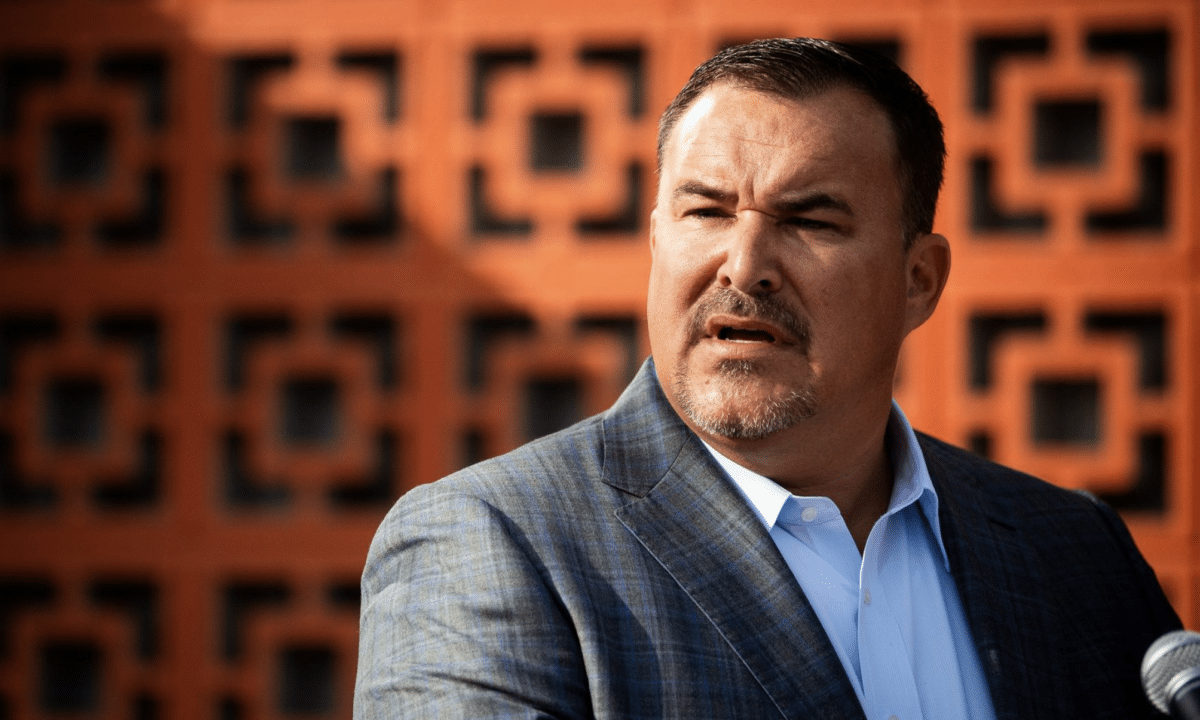
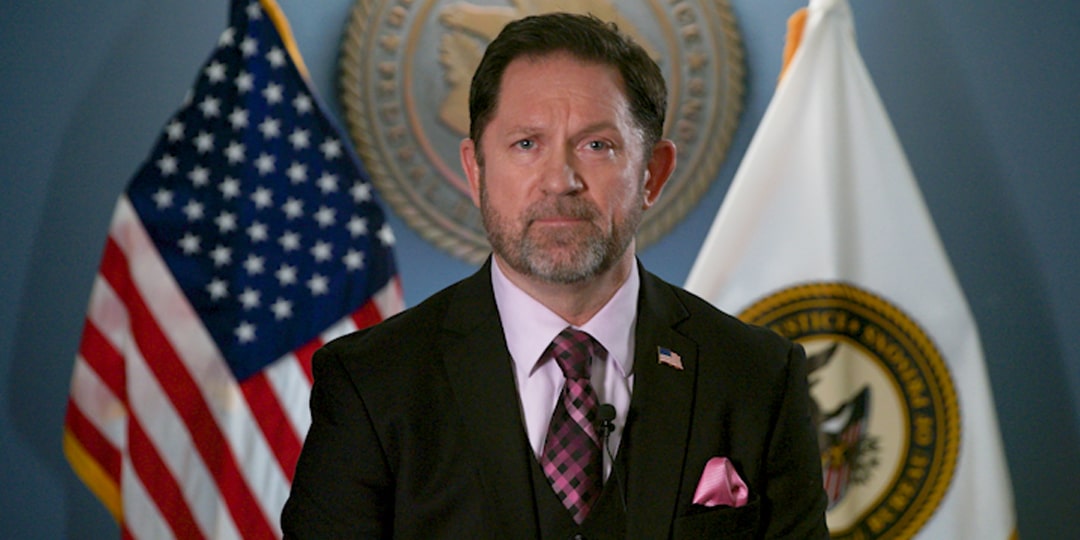
BOP Deputy Director Joshus Smith abruptly resigned last month, and whether it was voluntary is questionable given the terse notice published on the agency website. Who will replace him has yet to be announced.
The big question and crucial decision is if the Director William Marshall will assume a more central role, or if the deputy director will continue to be the real authority. In past BOP administrations, while the deputy wielded a lot of power, he or she was not the highly visible face of the agency like Smith was from the beginning. (Rumor has it that he was originally targeted for the director’s job, but his past prison time was too controversial – and it continued to be among many staff members throughout his short tenure.)
In the past few weeks, Director Marshall has by necessity been somewhat more in the limelight, but his experience in mostly in law enforcement, with minimal experience running a small correctional agency. The West Virginia Department of Corrections, which Marshall was appointed to oversee in 2023, has approximately 10, 000 inmates and 4,000 staff in comparison to the BOP’s approximately 152,000 inmates and 34,000 staff. His predecessor, Collette Peters, also came from a small state agency [Oregon] but she led the state system for a decade compared to Marshall’s 27 months. Peters ran the BOP or about three years and her deputy director, William Lothrop was an agency veteran who stayed very much in the background.
That leads me to believe that the new deputy director will be another person will play the more visible role Smith did. I hope the agency again brings in a person from outside the BOP culture, but is allowed them to amass a team that has their back. An interesting selection would be Randall Liberty, who recently retired as commissioner of the Maine Department of Corrections. His approach to the position was shaped by his personal history: When he was 7 years old, he visited his incarcerated father at the maximum-security Maine State Prison. It was 40 years later, in 2015, when Liberty returned to the same facility as its warden. He inherited a traditional, highly volatile environment plagued by staff-inmate violence, high suicide rates and regular, 23-hour-a-day lockdowns.
Liberty pioneered what became known as the “Maine Model of Corrections,” a human-centered operating philosophy that treats incarceration itself as the punishment, rather than adding further punishment inside. I once participated in tablet zoom meetings with a high-security inmate within his cell in a Maine facility who was working on a research project. That is leaps and bounds ahead of the BOP, which uses tablets more for profit-related motives than meaningful progressive programming.
Under Liberty’s tenure, Maine’s statewide recidivism rate plummeted to 21%, among the lowest in the United States (where the national average hovers around 50% to 65%). For prison residents who complete at least an associate degree while in the Maine system, the return-to-custody rate is a rather staggering 0.05%.
No matter who agrees to pick up the torch, they will need to extinguish many fires that continue to burn within the BOP.
What can we conclude from Smith’s tenure?
The polarization apparent in opinions about Smith’s tenure and departure reflect the split in our society. In both open and closed Facebook groups and LinkedIn comments, opinions ranged from describing him like the second coming of the messiah to dismissing him as an incompetent devil.
I’ve attempted to summarize below both the “good” and the “bad” changes Smith made – or tried to make. One of his moves can be seen in as both: the termination of the union’s collective bargaining agreement. That action — which both removed a significant barrier to progressive chances and provided staff another reason for resentment – remains a point of contention. The union recently won its fight for reinstatement in district court, then the BOP promptly found a new reason to terminate it. Stay tuned!
The good
Love them or hate them, Smith attempted to make drastic changes in the BOP culture, including recognizing the festering rot in management and spending substantially on recruiting; targeting decaying infrastructure; and undertaking PR efforts like unannounced prison visits in which he talked directly to inmates. Decades of F-up/move-up practices and good ole boy favoritism had resulted in employees being promoted beyond their skills and intelligence, affecting all aspects of agency operations. That culture was more prominent in some facilities, which have operated like rogues.
Another plus for Smith was the updating of nearly 100 BOP policies, which had long been overdue for revision. He also issued the agency’s first policy governing lockdowns and modified operations. Although I have yet to observe any consistent changes, it was a necessary first step to reducing the rampant use of these practices. Most recently, he inked a deal to finally bring tablets into the men’s prisons that will be set up for email correspondence and phone calls.
I applaud the fact that someone with a history of incarceration was appointed to work for the agency that once had such power over him. And based on what I could observe, Smith appeared to have good intentions; he personally helped a few people on issues that our organization brought to his attention. As one staffer wrote on social media:
A man who had been incarcerated built himself back up, created a multimillion-dollar business, helped formerly incarcerated people find jobs and stay out of trouble — and eventually became the second-highest-ranking official in the very agency that once imprisoned him. That should be the BOP’s dream.
We should want a million Josh Smiths.
Imagine a Bureau of Prisons whose ultimate measure of success wasn’t how many people it locked up, how many disciplinary reports it generated, or how many years it kept people behind bars.
Imagine instead if success meant: “How many people did we help become Josh Smith?” That’s rehabilitation. Unfortunately, the culture inside the BOP has often been built around something very different: punishment first, rehabilitation second. And when someone comes along trying to challenge that culture, the natural reaction inside a bureaucracy can be resistance.
Smith traveled around the country visiting institutions — sometimes unannounced. He challenged leadership. He pushed changes. He helped replace or transfer roughly 70% of BOP executive leadership and pushed the agency to confront problems that had been allowed to exist for years.
And not everybody liked it. Some employees and union representatives openly criticized his appointment because he had once been a federal inmate. But that’s exactly where the BOP needs to have an honest conversation with itself.
If a person serves their sentence, rebuilds their life, creates jobs, helps other people coming home from prison and ultimately becomes successful enough to lead — isn’t that evidence that rehabilitation can actually work? Instead of asking, “How dare a former inmate run the Bureau?” Maybe the question should be: “What did this man do differently that we should be teaching every person who enters federal prison?”
The bad
Attempting to turn such a behemoth of an agency so quickly comes with consequences, and ordinarily, effective leaders know to take it slow initially. First actions are overly scrutinized. Smith’s constant talk about leadership and accountability via public speeches and press releases could have been more measured and incremental.
Likewise, while talking to inmates during facility listening tours, kicking staff out of Going on facility listening tours is passe as all the previous directors participate in that dog and pony show. The Fau pau was taking around inmates to lecture staff and giving credibility to media people with an ax to grind that were constantly bashing the agency. Early on, the decision to terminate the union contract in combination with the listening tours that prioritized inmate feedback alienated a significant number of institution “homesteaders” (those who stay in place instead of transfer for promotions). Management has much less of an impact on facility culture than the rank and file, so when you alienate them, reform goals become almost unobtainable. I
Lowering the educational and experience requirements for correctional officers was also a poor decision that will have a negative impact going forward.
And making addictive tobacco products for sale was a head scratcher that has already been cancelled. (CBS News reported that a Florida company established for only three months won a contract to be the only business permitted to stock the commissaries with flavored nicotine pouches. However, the 6-mg pouches, called “mindSHFT,” are not authorized by the FDA for sale in the United States. Likewise, the BOP never formally issued a request for bids and the agency didn’t even have a signed contract with mindSHFT. Despite this, BOP trust fund chief Adam Morrow informed all federal prison commissaries on July 21 that the sale of nicotine pouches “has been authorized,” and the sole approved vendor would be SHFT Holdings Enterprise LLC.)
Here’s another staff member expressing his dissatisfaction with Smith:
Three decades ago, he walked into a federal prison in handcuffs. Fourteen months ago, he walked back through those same gates as the second most powerful figure in the entire federal prison system. On Monday, Josh Smith walked out again, leaving behind a mountain of unanswered questions, wrecked morale, and ethics complaints that make his departure as predictable as it was inevitable.
Smith’s rise was pitched as a heartwarming tale of conservative redemption: a former drug conspirator pardoned by Donald Trump who somehow rose to become Deputy Director of the Bureau of Prisons. But beneath the shiny public relations propaganda was a toxic cocktail of sheer incompetence and self-dealing that destabilized an already fragile agency.
Placing a man with zero law enforcement or administrative experience at the helm of an $8 billion federal agency bypassed standard civil service merit principles and background suitability rules, setting the stage for an absolute administrative disaster.
Inside the bureau, his 14 months felt less like modern management and more like a targeted purge. Smith ousted roughly 70 percent of the agency’s executive staff, alienating career officers who viewed the appointment of a convicted drug trafficker as a personal insult to their profession.The primary union representing prison staff watched morale collapse as experienced guards were driven to early retirement, all while Smith pushed policies that line staff felt systematically elevated inmates over the officers meant to keep the facilities safe.
The operational failures were quickly compounded by glaring conflicts of interest and bizarre financial arrangements. While running the BOP, Smith used his private media company to promote a documentary praising a consulting firm that his own agency had just handed a $180,000 contract to select new wardens.To top off the procurement circus, union officials raised alarms over a multi-million-dollar inmate tablet contract awarded to a Texas firm, warning the technology created unvetted contraband channels and severe safety hazards for line staff.
Then came the celebrity side-show that read more like a bad fever dream than federal law enforcement management. Reality television star Todd Chrisley, another felon pardoned by Trump, was granted unmonitored back-channel access to federal facilities across the Southeast. Chrisley then took to his podcast to publicly name line-level BOP employees, boasting on air that he had reported a female guard directly to Smith and demanded she be fired over a workplace grievance.
That staff, predictably, did not suffer in silence. Workers at FCI Hazelton in West Virginia described Smith’s presence as a slap in the face, while retired union leadership openly accused him of running a “revenge tour” against the guards who keep the lights on. The situation devolved so far into farce that former BOP employees set up a parody Facebook page specifically to celebrate his exit with farewell memes.
Going forward
The cling-ons and sycophants in the advocacy world claim Smith’s tenure was some great success story while his detractors call it a failed experiment that has further wrecked the agency. Time will tell if the truth lies somewhere in the middle. More Than Our Crimes members mostly report sympathy with Smith, dismissing the allegations of contractual irregularities. They believe his desire to change the system for the better was genuine. However, based on the emails I have received from inmates around the country, there were at least several facilities that became worse during his tenure and operated unchecked.
You decide!