
From Mail to Legal Calls, BOP Bends Rules to Block Prisoner Communication
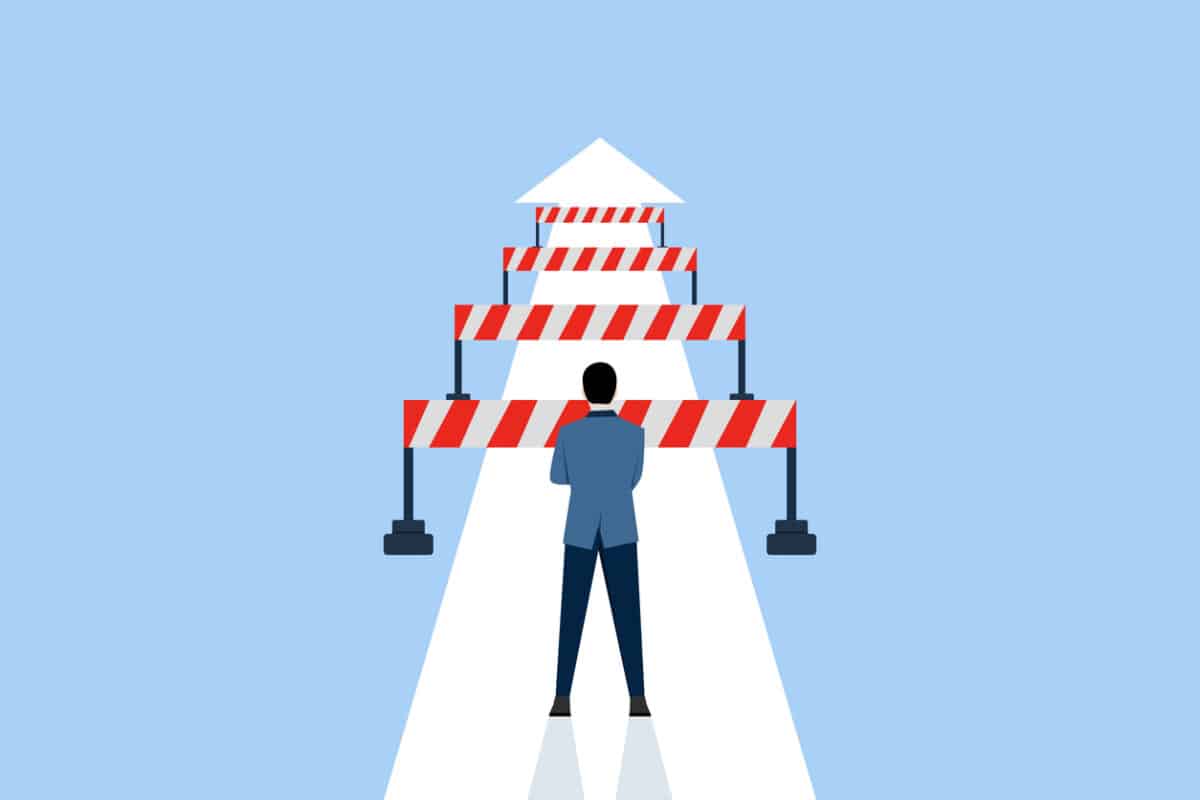
The BOP is increasingly deviating from policy, the Code of Federal Regulations (CFR) and even its own past practices in its obstruction of inmate communication, even with their lawyers.  

These growing restrictions have been subtle and incremental, but systemic. The significant delays in mail delivery were initially attributed to the introduction of contraband, such as suboxone and K-2. One such incident occurred in August 2024, when a mailroom officer at USP Atwater died after reportedly being exposed to a toxic substance on a letter. That death triggered further restrictions on mail processing at federal prisons across the country. 

Although the BOP conducted an official pilot program in which incoming mail is copied, then distributed, it wasn’t institutionalized via law or policy change notices. This lack of clear, written guidelines has resulted in a lack of transparency and inconsistent practices among facilities, usually at a warden’s whim.  

And these issues do not just interfere with the mail. Policy and practice deviations impact communication via telephone and email as well. PERA staff members regularly correspond with hundreds of incarcerated people and their family members, as well as attorneys. The frequency of these complaints has noticeably ramped up. What we are hearing:  

Delayed and missing postal mail

Postal-service mail (both personal and legal) is delayed weeks or months, and sometimes totally disappears. Mail theft and/or destruction is a crime. When we receive repeated reports about one prison, it is simply too coincidental to think that post offices are losing it. (In the case of our collaborator at More Than Our Crimes, Pam Bailey, none of her letters to her network members at FCI Florence were received!)  
 
When letters are rejected, the CFR requires that both the sender and the recipient be notified (and the correspondence returned). The CFR included in the BOP policy statement titled Correspondence states:  

“§540.13 Notification of rejections. When correspondence is rejected, the Warden shall notify the sender in writing of the rejection and the reasons for the rejection. The Warden shall also give notice that the sender may appeal the rejection. The Warden shall also notify an inmate of the rejection of any letter addressed to that inmate, along with the reasons for the rejection and shall notify the inmate of the right to appeal the rejection. The Warden shall return rejected correspondence to the sender unless the correspondence includes plans for or discussion of commission of a crime or evidence of a crime, in which case there is no need to return the correspondence or give notice of the rejection, and the correspondence should be referred to appropriate law enforcement authorities.” 

Limits on books

Hard cover books are routinely rejected by most federal prisons, despite being allowed in BOP policy and CFR:  

540.71 Procedures. (a)(1) At all Bureau institutions, an inmate may receive hardcover publications and newspapers only from the publisher, from a book club, or from a bookstore. The sender’s address must be clearly identified on the outside of the package. (2) At medium security, high security, and administrative institutions, an inmate may receive softcover publications (for example, paperback books, newspaper clippings, magazines, and other similar items) only from the publisher, from a book club, or from a bookstore. (3) At minimum security and low security institutions, an inmate may receive softcover publications (other than newspapers) from any source.” 

Granted, this policy has not been updated since 2011 (almost all BOP program statements have not been revised in a decade or more), but it is still on the books. And while prisoners tell us staff cite difficulty in checking hardcover books for contraband, there is no logical reason why a few federal prisons can safely receive hardback books while others cannot. 

And then there are three prisons (that we know of) that are essentially banning the receipt of books altogether: USP Lee, USP McCreary and FCI Allenwood Medium. From what we hear, inmates can only order books themselves, directly from publishers. It’s a process so unwieldy that the effect is to limit inmates to the books in the prison library.

Obstructed legal communication

Equally concerning is the limitation of legal communication for people involved in post-conviction litigation. A lot of post-conviction litigation has been filed since Covid and over First Step Act violations, and the need for legal communication has drastically increased. Yet inmates and attorneys asking for legal calls are being outright denied and/or asked to prove an imminent court deadline (although that is not required). BOP policy only calls for this limitation when lawyers or their clients make repeated requests in a short period of time:

The inmate is afforded the opportunity to place an occasional unmonitored call to his or her attorney. Based on these provisions, frequent confidential inmate attorney calls should be allowed only when an inmate demonstrates that communication with his or her attorney by other means is not adequate. For example, when the inmate or the inmate’s attorney can demonstrate an imminent court deadline.”  

Note the word “frequent.” However, we’ve heard from people making first requests for a legal call being asked to provide documentation of an imminent deadline! Dig a little deeper, and you’ll see that the CFR within this policy states: “The warden may not apply frequency limitations on inmate telephone calls to attorneys when the inmate demonstrates that communication with attorneys by correspondence, visiting, or normal telephone use is not adequate.” The CFR is a bit archaic, considering its reference to postal-service mail (which is often slow and delayed) and the inference that communication can be accomplished via a personal visit (which assumes the client is in a local facility, instead of 500 or more miles away). Lastly, suggesting “normal” telephone use implies it is appropriate to conduct protected legal communication on a monitored line. That is unacceptable.  

Email blocks

There is also an increasing practice of restricting email communication via Corrlinks, with advocacy organizations among the targets. We have received many credible reports of staff intimidating and even retaliating against people who correspond with advocates when they identify/expose staff misconduct, etc. Pam Bailey, our More Than Our Crimes collaborator, filed a lawsuit against the BOP to stop it from blocking such communications and the judge has declined the agency’s effort to have it dismissed. And yet the harassment continues. Recently, three individuals got word to her that they were blocked from adding her to their contact lists, then thrown into the SHU for “investigation.” 

All of this is in addition the recent BOP ban on group emails, which effectively puts a stop to newsletters from advocacy and legal-update newsletters.

Just what is the BOP so afraid of? 

Family and Legal Visits Increasingly Treated as Expendable

August 16: All visitation at FCI Cumberland has been suspended until further notice; however, officials for the facility did not provide a reason.

In response to a Cumberland Times-News request for information about a report of a lockdown at the prison, Emery Nelson at BOP’s public affairs office said that “for privacy, safety, and security reasons,” it does not comment on conditions of confinement for any incarcerated individual. He went on to say that the BOP also does not discuss internal guidance or security practices, such as reasons for suspending visitation or making changes to movement schedules at any specific facility. “The decision to limit or suspend visitation for a variety of reasons is made by the warden at each institution on a case-by-case basis.” 

This is a recent news report. But based on the comments we are receiving from adults in custody, family members and attorneys, cancellation of visits (including legal calls/visits) seems to be on the rise at federal prisons around the country – sometimes with no notice until family members arrive. 

During my 23 years in various case management capacities, administrators did everything possible to protect family visits because of the importance of social ties to mental health and institutional security. (In fact, one aspect of an AIC’s custody classification (degree of supervision needed) is their “efforts to build, maintain and strengthen family/community ties.”) Yet families of incarcerated people often have low incomes and must spend significant resources to travel out of state to remote locations, frequently an hour or more away from the nearest airport. So, visits can be a financial hardship. Forcing them to wait until the last minute to make their arrangements (thus forgoing the cheapest fares), due to the uncertainty of visits is bad enough. The frequent, last-minute cancellation of visitation is simply unacceptable and must be managed better by thee BOP.  

Consider the recent experience of Pam Bailey, co-founder of More Than Our Crimes and PERA’s director of communications. In her words:

I had put off visiting my co-founder, Rob Barton, for several months because family members with loved ones at USP Coleman 1 (Florida) kept reporting cancellations. Finally, word was that visits were going to start being more stable. So, I waited until Wednesday of that week and booked a flight from DC, a hotel room and a rental car (total: ~$800). I arrived Friday evening and immediately checked the Facebook group for families. One of the women reported that at 7 p.m., prison staff had told her that “visits were on.” Staff said the same thing at 7:30 a.m. Saturday. (And yes, it’s necessary to keep checking in, because the answer often changes on a dime.) But at 8:30, when I arrived at the prison, we were told that visits were now cancelled. Why? Not enough staff had showed up to work. 

The same steps repeated themselves the next day, Sunday. I was told by others to ‘enjoy your time in Florida.’ But I was not there for a vacation. If I had wanted a vacation – which I couldn’t really afford at the time – I would have gone someplace else, to be frank. And meanwhile, my disappointment was nothing compared to what Rob was experiencing.  He literally had been longing for both human touch and real time to talk. (Phone calls are limited to 10 minutes; try conferring about nonprofit matters in 10-minute bursts, much less have intimate conversations with a spouse or try to rebuild a relationship with a child.) I couldn’t talk to him (they are always locked down on the weekends), but I didn’t have to. I knew that if he was the type who cried, he was doing so then. 

Sunday afternoon, I called the prison, and after about five tries, I got through to someone. “If you can tell me there will be visits tomorrow,” I said, “I will pay the extra expense to change my arrangements, so I leave on Monday (the final day allocated to visits) instead.” But he replied, “You’ll have to call tomorrow morning to find out.” I couldn’t afford to stay for another day if visits were cancelled again. So, I went home. 

And the next day, there were visits. (Update: However, now, Monday visits have been cancelled altogether.)

One cause of cancelled visits: staffing

As with Coleman, many lockdowns across the BOP system are imposed, at the warden’s discretion due to “short of staff.” In fact, a shortage of staff seems to be the go-to justification for most departures from normal operations. Yet a GAO report shows the BOP has nearly 3,000 more staff today than in 2005, when there were more people in federal prison. PERA believes the agency is top heavy, thus compromising the number of line correctional officers. Former BOP Director Mark Inch (who was, like the current agency director Colette Peters, came into his position as an “outsider”) realized this early in his tenure and was considering closing two regional offices when he abruptly resigned less than a year after his appointment. There was a time when the BOP didn’t have any regional offices; it is PERA’s contention that inefficiencies, redundancies and inconsistencies occur because of the six different bureaucracies that now exist.  

PERA recently learned that a contractor for the BOP has developed  an “automated staffing tool” to “determine the optimal number of positions required in each institution.” We have submitted a FOIA request for all analyses produced to date by the tool. Once received, we will conduct a deeper dive into the findings and report back to our subscribers. 

Collective punishment

As for FCI Cumberland (Maryland), we do not know yet what caused the current lockdown. However, an individual who was just released reports that it was imposed when one of the officers was assaulted. If it’s true that the lockdown was imposed of an incident in one unit, then it is another example of collective punishment practices that also seem to be on the rise. 

This type of collective punishment is wrong and unnecessary, and wardens should not have this degree of discretion. It is time for lockdowns, as well as abrupt cancellation of visits, to be documented for transparency and governed with clear guidance set at the central office level.  

Legal communication

In a related vein, PERA also continues to receive complaints about difficulties and inconsistencies in securing legal calls and visits. 

Aside from the usual inability of facility staff to answer the telephone, there has been an increase in complaints from attorneys who are ghosted after setting up legal calls, as well as a refusal of staff to leave the room once the call is connected. A few weeks ago, an attorney arranged a legal visit in advance and flew into Miami, only to be denied entrance due to cancellation of visits. PERA calls on the DOJ to broaden the scope of its Access to Justice initiative to include all BOP institutions rather than only administrative detention facilities , which do not have as many problems with legal communication due to their pre-trial focus. 

There has been a lot of talk about reform during the past two years, but these issues and so many others could be alleviated simply with by stronger leadership, from the top.

Subscribe

* indicates required